
Table of Contents
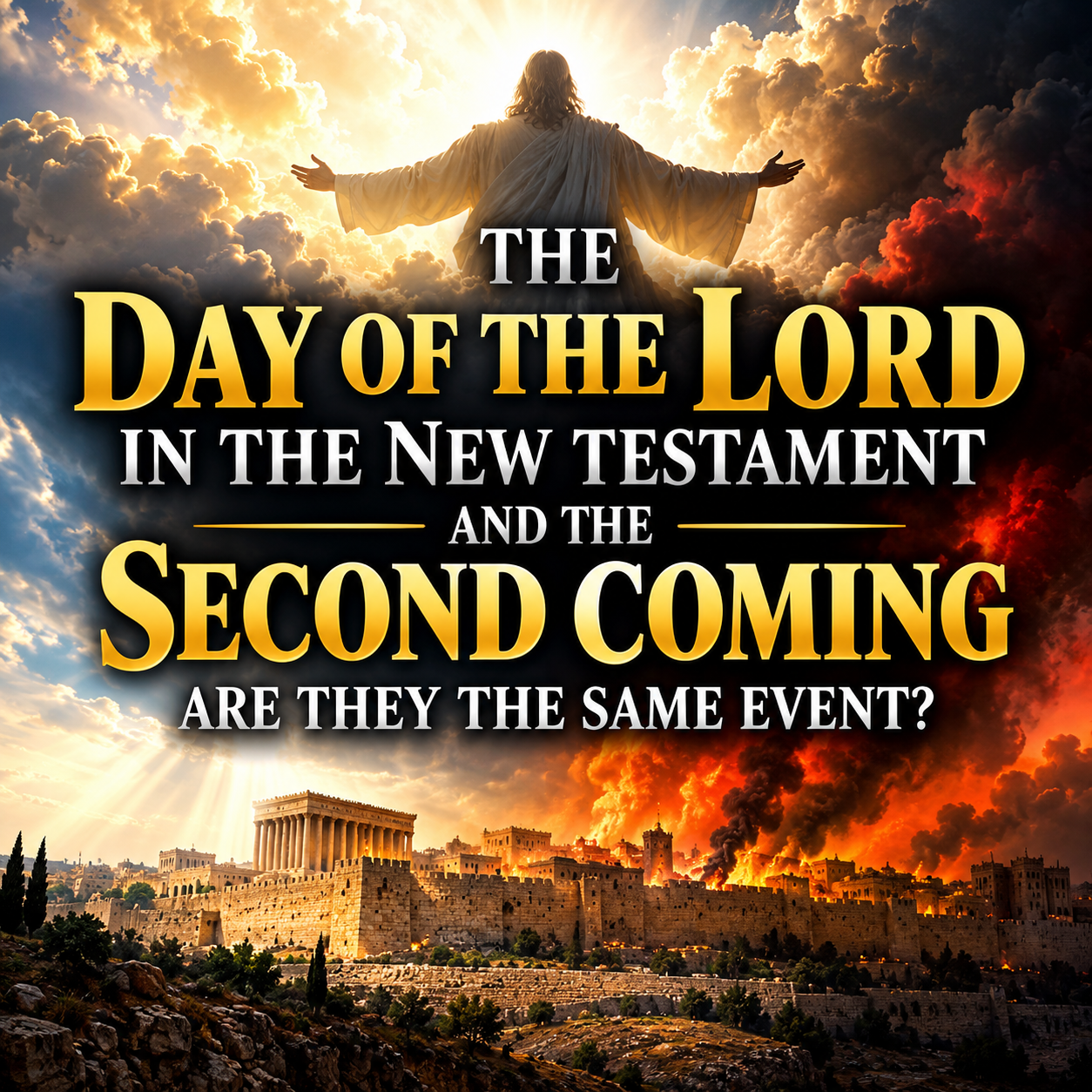
ARE THEY THE SAME EVENT?
For many years, I was taught that the Day of the Lord and the Second Coming of Jesus Christ were events that belonged to the future. I heard about a coming judgment, the destruction of the heavens and earth, and the return of Christ to establish His kingdom. Like many others, I assumed these things had not yet happened.
But as I began studying the Scriptures more carefully, something caught my attention. The language Jesus and the apostles used to describe the coming of Christ was not new language. It was the same prophetic language God had used throughout the Old Testament when He came in judgment against nations.
That discovery became one of the major reasons I eventually moved from a partial understanding of fulfilled prophecy to a full understanding of its fulfillment.
The question I began asking was simple: If God used clouds, darkness, fire, trembling heavens, and falling stars to describe historical judgments in the Old Testament, why should we automatically interpret that same language differently when we encounter it in the New Testament?
And another question followed.
Were Jesus and the apostles describing two different events, the Day of the Lord and the Second Coming, or were they describing the same approaching judgment from different perspectives?
I believe the Scriptures provide a compelling answer.
THE DAY OF THE LORD WAS ALREADY ESTABLISHED IN THE OLD TESTAMENT
Before we can understand the Day of the Lord in the New Testament, we must understand how the prophets used that expression.
The Day of the Lord was not always a single event. Throughout the Old Testament, God came in judgment against different nations at different times. These judgments were described using dramatic language involving the heavens, earth, sun, moon, stars, clouds, and fire.
Consider Babylon.
Behold, the day of the LORD cometh, cruel both with wrath and fierce anger, to lay the land desolate: and he shall destroy the sinners thereof out of it. For the stars of heaven and the constellations thereof shall not give their light: the sun shall be darkened in his going forth, and the moon shall not cause her light to shine.
Isaiah 13:9–10 (KJV)
Isaiah was prophesying judgment against Babylon. The context identifies the nation, and Isaiah 13:17 specifically names the Medes as instruments of judgment.
Did the literal sun stop shining? Did the physical stars fall out of heaven? Was the universe destroyed?
No. The language described the overthrow of Babylon and its established power.
Now consider Egypt.
The burden of Egypt. Behold, the LORD rideth upon a swift cloud, and shall come into Egypt: and the idols of Egypt shall be moved at his presence, and the heart of Egypt shall melt in the midst of it.
Isaiah 19:1 (KJV)
God said He would come into Egypt riding upon a cloud.
This was a coming of the Lord in judgment. The passage does not require us to imagine God physically descending through the atmosphere upon a literal cloud.
The cloud was part of the established prophetic imagery of divine authority, presence, and judgment.
Ezekiel used similar language concerning Egypt.
And when I shall put thee out, I will cover the heaven, and make the stars thereof dark; I will cover the sun with a cloud, and the moon shall not give her light. All the bright lights of heaven will I make dark over thee, and set darkness upon thy land, saith the Lord GOD.
Ezekiel 32:7–8 (KJV)
Once again, the darkening of the heavenly bodies described the downfall of a nation.
These passages establish something important about biblical prophecy.
The coming of the Lord in judgment did not necessarily mean a visible, bodily appearance of God, nor did cosmic judgment language necessarily describe the destruction of the physical universe.
The historical and covenantal context determined the meaning.
JESUS USED THE SAME PROPHETIC LANGUAGE
Now consider the words of Jesus concerning the destruction of Jerusalem and the temple.
Immediately after the tribulation of those days shall the sun be darkened, and the moon shall not give her light, and the stars shall fall from heaven, and the powers of the heavens shall be shaken: And then shall appear the sign of the Son of man in heaven: and then shall all the tribes of the earth mourn, and they shall see the Son of man coming in the clouds of heaven with power and great glory.
Matthew 24:29–30 (KJV)
Does that language sound familiar?
Isaiah described the sun being darkened and the moon withholding its light when Babylon was judged. Ezekiel used the same imagery concerning Egypt.
Now Jesus uses that established prophetic language while discussing the coming judgment upon Jerusalem.
Why should we suddenly abandon the interpretive framework provided by the Old Testament prophets?
Jesus also draws upon Daniel’s vision of the Son of Man.
I saw in the night visions, and, behold, one like the Son of man came with the clouds of heaven, and came to the Ancient of days, and they brought him near before him. And there was given him dominion, and glory, and a kingdom, that all people, nations, and languages, should serve him: his dominion is an everlasting dominion, which shall not pass away, and his kingdom that which shall not be destroyed.
Daniel 7:13–14 (KJV)
Notice the direction of the coming in Daniel’s vision. The Son of Man comes to the Ancient of Days and receives dominion, glory, and a kingdom.
This is a vision of authority and vindication.
When Jesus spoke of the Son of Man coming upon the clouds, His Jewish audience already had this prophetic background.
And Jesus did not leave the timing of His prophecy entirely open.
Verily I say unto you, This generation shall not pass, till all these things be fulfilled.
Matthew 24:34 (KJV)
Jesus identified the generation that would witness the fulfillment of the things He had just described.
Within the fulfilled understanding of prophecy, His coming in judgment was manifested in the destruction of Jerusalem and its temple in AD 70.
But was this coming separate from the Day of the Lord described by the apostles?
Let’s examine what Paul wrote.
PAUL CONNECTED THE COMING OF CHRIST WITH THE DAY OF THE LORD
One of the strongest connections appears in Paul’s first letter to the Thessalonians.
For this we say unto you by the word of the Lord, that we which are alive and remain unto the coming of the Lord shall not prevent them which are asleep.
1 Thessalonians 4:15 (KJV)
Paul speaks of the coming of the Lord and includes himself among those who might remain alive until that event.
He continues describing the Lord’s descent, the resurrection, and the gathering of believers.
Then notice what he says as the discussion continues.
But of the times and the seasons, brethren, ye have no need that I write unto you. For yourselves know perfectly that the day of the Lord so cometh as a thief in the night. For when they shall say, Peace and safety; then sudden destruction cometh upon them, as travail upon a woman with child; and they shall not escape.
1 Thessalonians 5:1–3 (KJV)
This is extremely important.
Paul has just discussed the coming of Christ, and now he speaks about the Day of the Lord.
Remember, Paul did not write his letter with the chapter divisions we use today. Those divisions were added many centuries later.
The discussion flows from the coming of the Lord into the Day of the Lord.
Why would we assume Paul suddenly changed subjects and began describing an entirely different event?
The natural connection is that Paul is discussing the same approaching event, first emphasizing the hope of believers and then the judgment awaiting those unprepared.
Notice the contrast.
For believers, the coming of Christ meant comfort, gathering, and deliverance.
For those facing judgment, the Day of the Lord meant sudden destruction.
The same event could bring deliverance to one group and judgment to another.
That pattern was already familiar throughout the Old Testament.
PAUL MAKES THE CONNECTION EVEN CLEARER IN HIS SECOND LETTER
Paul returns to the subject in 2 Thessalonians.
Now we beseech you, brethren, by the coming of our Lord Jesus Christ, and by our gathering together unto him, That ye be not soon shaken in mind, or be troubled, neither by spirit, nor by word, nor by letter as from us, as that the day of Christ is at hand.
2 Thessalonians 2:1–2 (KJV)
Notice the connection between the coming of Christ, the gathering of believers, and the approaching day.
The King James Version reads “day of Christ” in verse 2, while many modern translations read “day of the Lord,” reflecting a difference among Greek manuscripts.
Either way, Paul’s discussion closely connects the coming of Christ with the day under consideration.
Paul does not introduce one coming of Christ for the first-century believers and another coming thousands of years later.
He addresses the Thessalonians about an event that mattered directly to their circumstances.
The following verses discuss the man of sin, the mystery of iniquity already at work, and the destruction associated with the Lord’s coming.
The immediate audience and historical setting must remain central to our interpretation.
THE REVELATION OF CHRIST WOULD BRING RELIEF TO THOSE BEING PERSECUTED
Paul also wrote:
And to you who are troubled rest with us, when the Lord Jesus shall be revealed from heaven with his mighty angels, In flaming fire taking vengeance on them that know not God, and that obey not the gospel of our Lord Jesus Christ:
2 Thessalonians 1:7–8 (KJV)
Who was Paul addressing?
He was writing to first-century believers who were experiencing persecution.
And what did he promise them?
Relief when the Lord Jesus would be revealed in judgment.
This is not an insignificant detail.
If Paul’s promise concerned an event thousands of years beyond the lives of those suffering believers, we must explain how the promised relief was connected to their circumstances.
Now compare Paul’s language with Isaiah.
For, behold, the LORD will come with fire, and with his chariots like a whirlwind, to render his anger with fury, and his rebuke with flames of fire.
Isaiah 66:15 (KJV)
Once again, we encounter the same prophetic imagery.
The Lord comes with fire and executes judgment.
Paul’s description of Christ being revealed in flaming fire follows the established language of divine judgment found throughout the prophets.
The question is not whether Christ possessed the authority to judge. The question is how Scripture describes the manifestation of that authority.
PETER DESCRIBED THE DAY OF THE LORD USING THE SAME LANGUAGE
Peter provides another important connection.
But the day of the Lord will come as a thief in the night; in the which the heavens shall pass away with a great noise, and the elements shall melt with fervent heat, the earth also and the works that are therein shall be burned up.
2 Peter 3:10 (KJV)
This passage is often interpreted as describing the future destruction of planet Earth and the physical universe.
But should we automatically assume that interpretation?
We have already seen the prophets describe the overthrow of nations using the language of darkened heavens, trembling earth, and cosmic upheaval.
Peter is using similarly dramatic prophetic language.
The Greek word translated “elements” is stoicheia, a word that can refer to elementary principles or foundational components. Paul uses this word in Galatians 4:3 and 4:9 in discussions involving religious bondage.
That does not automatically prove that Peter’s use of the word refers to the Mosaic Law. Context must determine its meaning.
However, when we consider the covenantal transformation taking place in the first century, there is a substantial interpretive case for understanding Peter’s language as describing the removal of the old covenant order rather than the annihilation of the physical universe.
Peter continues:
Nevertheless we, according to his promise, look for new heavens and a new earth, wherein dwelleth righteousness.
2 Peter 3:13 (KJV)
Where did Peter obtain the promise of a new heaven and a new earth?
From the Old Testament prophets.
For, behold, I create new heavens and a new earth: and the former shall not be remembered, nor come into mind.
Isaiah 65:17 (KJV)
Isaiah’s prophecy concerns the establishment of a new order in which God’s righteousness and blessings are manifested.
Within the fulfilled covenantal understanding, the passing of the old heavens and earth represents the conclusion of the old covenant order, while the new heavens and earth describe the established new covenant reality in Christ.
This understanding connects Peter’s Day of the Lord with the covenantal transformation associated with the coming of Christ.
PETER HAD ALREADY IDENTIFIED THE LAST DAYS
On the Day of Pentecost, Peter stood before the people and declared:
But this is that which was spoken by the prophet Joel; And it shall come to pass in the last days, saith God, I will pour out of my Spirit upon all flesh: and your sons and your daughters shall prophesy, and your young men shall see visions, and your old men shall dream dreams:
Acts 2:16–17 (KJV)
Peter did not say Joel’s prophecy would begin thousands of years later.
He said, “This is that.”
Then he continued quoting Joel.
The sun shall be turned into darkness, and the moon into blood, before that great and notable day of the Lord come:
Acts 2:20 (KJV)
Notice the relationship.
Peter identified the outpouring of the Spirit with Joel’s prophecy concerning the last days, and that same prophecy anticipated the great Day of the Lord.
Within the fulfilled interpretation, the last days were the closing days of the old covenant age.
The outpouring of the Spirit began during the first century, and the approaching Day of the Lord would bring judgment upon the old covenant order.
This was the generation witnessing the transition from the old covenant administration to the fully established new covenant order.
JOHN ALSO DESCRIBED AN APPROACHING JUDGMENT
The Book of Revelation contains the same prophetic vocabulary.
And I beheld when he had opened the sixth seal, and, lo, there was a great earthquake; and the sun became black as sackcloth of hair, and the moon became as blood; And the stars of heaven fell unto the earth, even as a fig tree casteth her untimely figs, when she is shaken of a mighty wind.
Revelation 6:12–13 (KJV)
Compare this with Isaiah 13, Ezekiel 32, Joel 2, and Matthew 24.
The prophetic imagery is unmistakably similar.
John also records:
For the great day of his wrath is come; and who shall be able to stand?
Revelation 6:17 (KJV)
And the book begins with a statement about timing.
The Revelation of Jesus Christ, which God gave unto him, to shew unto his servants things which must shortly come to pass; and he sent and signified it by his angel unto his servant John:
Revelation 1:1 (KJV)
Near the conclusion of the book, John is told:
And he saith unto me, Seal not the sayings of the prophecy of this book: for the time is at hand.
Revelation 22:10 (KJV)
Those time statements deserve serious consideration.
The book announces approaching events and uses the same judgment language found throughout the Old Testament prophets.
In the fulfilled interpretation, Revelation’s judgment scenes culminate in the destruction of old covenant Jerusalem, symbolically portrayed as the unfaithful city, and the manifestation of the New Jerusalem, the bride of Christ.
WERE THE APOSTLES DESCRIBING MORE THAN ONE COMING?
This brings us to the central question.
Jesus described His coming in the clouds and placed the fulfillment within that generation.
Paul connected the coming of Christ with the Day of the Lord and the gathering of believers.
Peter described the Day of the Lord as the passing of the heavens and earth.
John described approaching judgment using the same prophetic imagery.
Were these separate events, scattered across thousands of years?
Or were the New Testament writers describing different aspects of one climactic covenantal fulfillment?
I believe the second explanation provides a consistent understanding of the passages.
The coming of Christ meant vindication and deliverance for His people, judgment upon His adversaries, and the conclusion of the old covenant age.
This does not mean every Old Testament Day of the Lord was the same historical event. Babylon experienced judgment. Egypt experienced judgment. Other nations experienced judgment.
But when Jesus and the apostles spoke about the approaching Day of the Lord in connection with Christ’s coming, they were pointing toward the climactic judgment associated with the end of that age.
WHY THIS CHANGED MY UNDERSTANDING OF PROPHECY
For a time, I understood that much of Matthew 24 had been fulfilled in AD 70, while still believing other passages concerning the coming of Christ remained unfulfilled.
But the more I studied, the more difficult it became to separate passages that seemed to be describing the same event.
If Matthew 24 uses Old Testament prophetic imagery to describe Jerusalem’s judgment, why should similar imagery automatically require a different kind of fulfillment elsewhere?
If Paul connected the coming of Christ with the Day of the Lord, what requires us to divide them?
If Peter described the Day of the Lord using the established language of cosmic judgment, why must we assume he was describing the physical destruction of the universe?
And if Jesus identified His generation as the one that would witness the fulfillment of His prophecy, why should we move that fulfillment thousands of years into the future?
These were not questions I could simply dismiss.
I also recognize that those who hold a future Second Coming offer arguments based on the resurrection, the nature of Christ’s appearing, and other passages. Similar prophetic imagery alone does not settle every interpretive question.
But when I considered the language, context, audience, and timing together, I became convinced that the New Testament was pointing toward one climactic first-century fulfillment.
That was one of the major turning points in my understanding of fulfilled prophecy.
CONCLUSION: ONE DAY, ONE COMING, ONE COVENANTAL FULFILLMENT
The Old Testament provides the prophetic vocabulary. Jesus uses that vocabulary when describing His coming. Paul connects His coming with the Day of the Lord. Peter describes the Day of the Lord in the language of the passing heavens and earth. John portrays the approaching judgment using the same prophetic imagery.
These connections should not be ignored.
I believe the Day of the Lord and the Second Coming described by Jesus and the apostles belong to the same climactic event, fulfilled in the first century with the judgment upon Jerusalem and the conclusion of the old covenant age in AD 70.
The old covenant administration passed away. The new covenant was fully established. Christ’s kingdom was vindicated, and His people entered into the fullness of the promised covenantal reality.
The question is not whether Jesus kept His promise to come.
The question is whether we are interpreting His promise according to the prophetic language, historical context, and time statements that Scripture itself provides.
Jesus said:
Verily I say unto you, This generation shall not pass, till all these things be fulfilled.
Matthew 24:34 (KJV)
I believe He meant exactly what He said.
