
Josephus
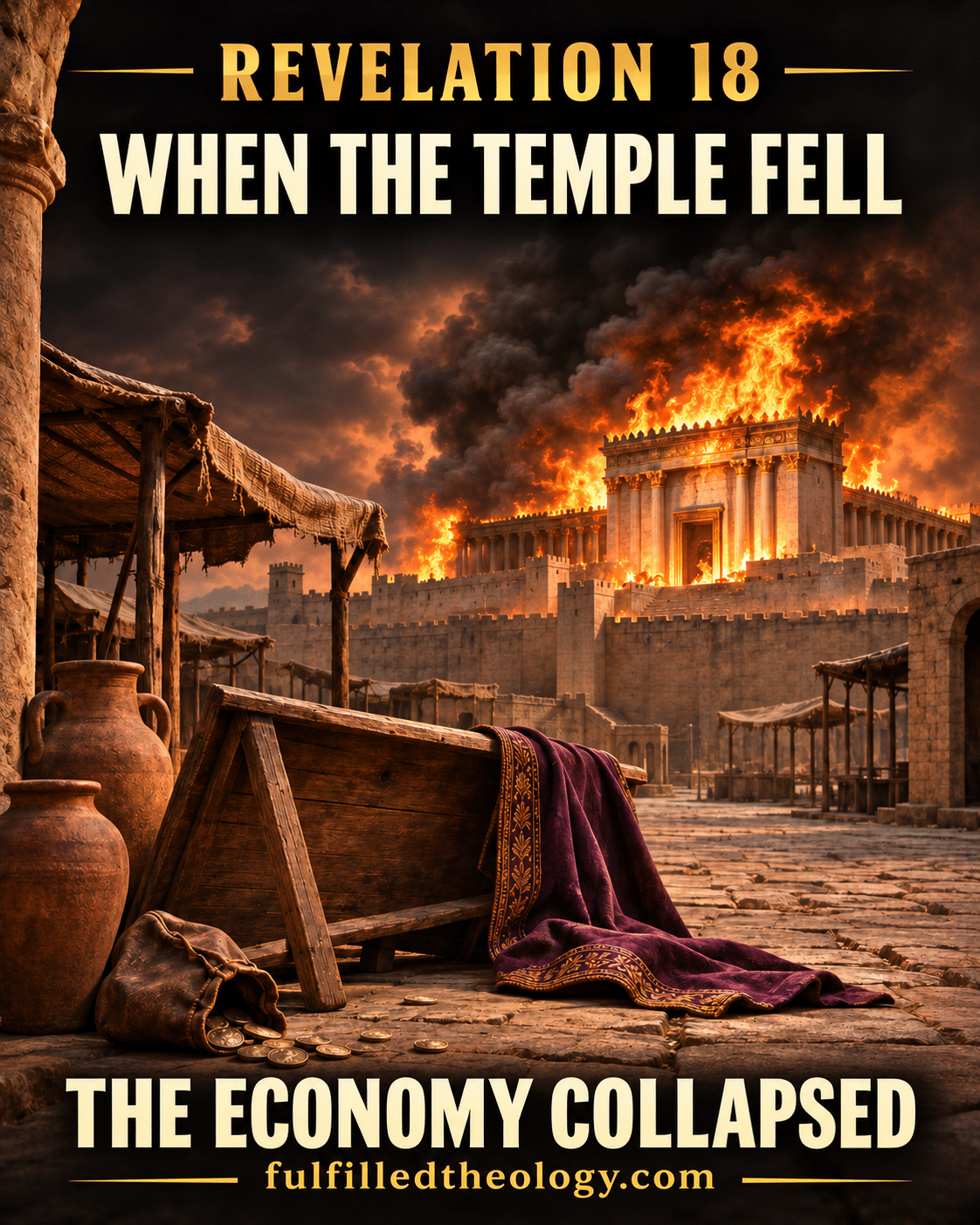
When Jerusalem’s temple fell in AD 70, the religious and economic order surrounding it came crashing down. Revelation 18 portrays that judgment through grieving merchants, silenced streets, and a city charged with the blood of prophets and saints. By connecting John’s vision with Old Testament imagery and Jesus’ warnings, this study explores Jerusalem’s identity as Babylon and why the merchants mourned when her market went silent.

For generations, Matthew 7:13–14 has been taught as a warning that most of humanity will spend eternity in a burning hell. But what if Jesus was warning His own generation about the destruction approaching Jerusalem? The broad road was the path of unbelief and rejection of Christ, leading to the devastating judgment of AD 70. The narrow way was faith in Jesus Christ, through whom believers passed from death unto life. Many who believed His warnings also escaped the physical destruction of Jerusalem. When we examine these words within their first-century context, the broad road and narrow way reveal a powerful connection between covenantal judgment, the remnant of Israel, and the everlasting life found in Christ.