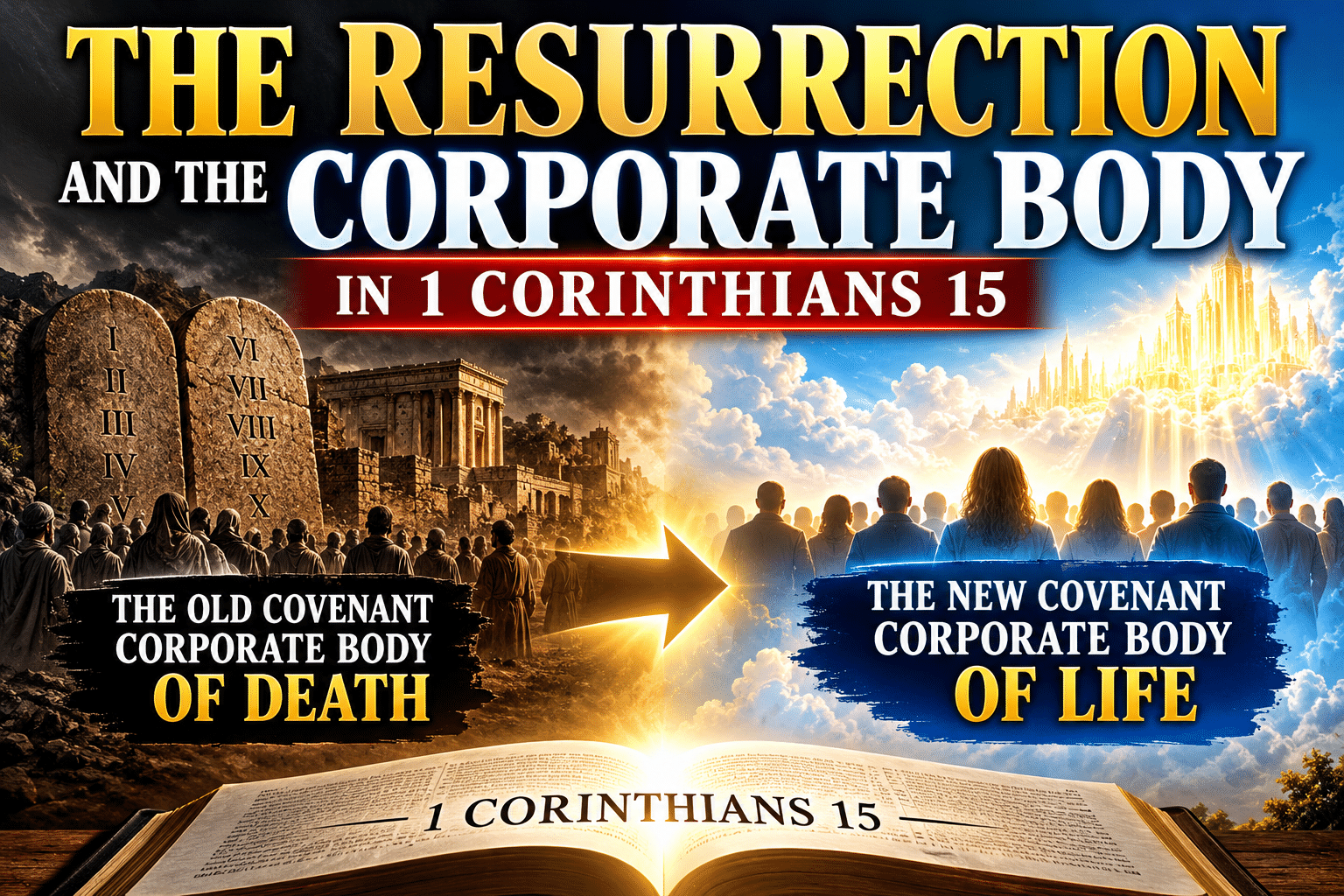
Table of Contents
DID THEY REALLY TEACH WHAT FULL PRETERISTS BELIEVE?
Have Fulfilled Eschatology Believers Made the Same Mistake?
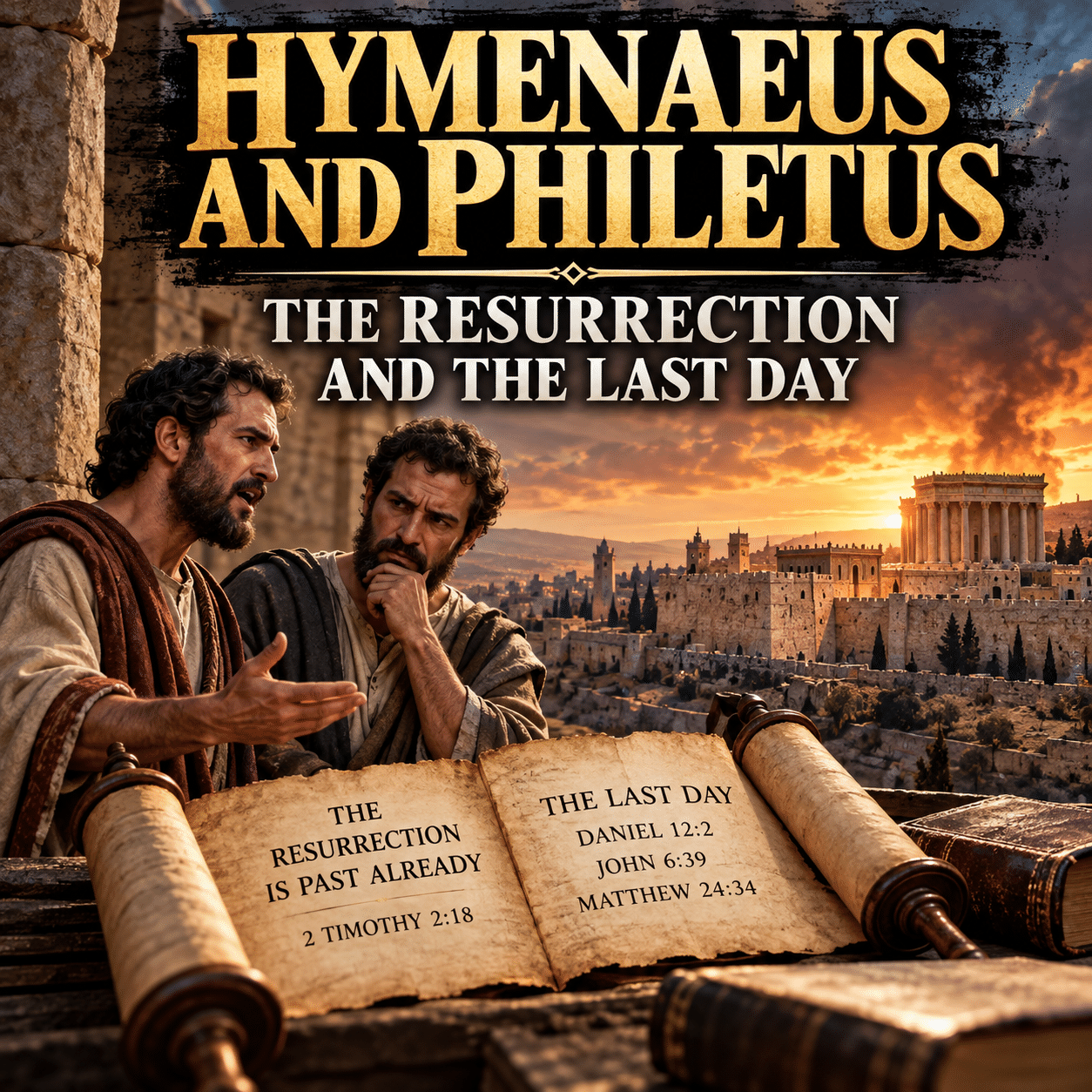
One of the accusations frequently made against those of us who believe biblical prophecy has been fulfilled is that we are guilty of the same error as Hymenaeus and Philetus, the two men Paul mentioned in his second letter to Timothy.
We’ve been accused of teaching the same doctrine Paul condemned, spreading dangerous theology, and even undermining the faith of other believers simply because we believe the resurrection has already been fulfilled.
But is that really what Paul was addressing?
Rather than allowing accusations or traditional interpretations to determine what we believe, shouldn’t we open our Bibles and examine what Paul was actually saying?
After all, if we’re going to accuse someone of spreading a doctrine that overthrows the faith of believers, we had better understand the historical context, the audience, and the circumstances surrounding Paul’s warning.
And here’s something worth really considering.
If the resurrection Paul was discussing involved dead physical bodies coming out of their graves, how could anyone convince believers that such an event had already happened?
Let’s say that again. How could anyone convince believers that such an event already took place?
Wouldn’t everyone have known?
Wouldn’t the evidence have been obvious?
Let that sink in.
Let’s examine the Scriptures carefully, because I believe there’s much more to this passage than we’ve traditionally been taught.
WHAT DID HYMENAEUS AND PHILETUS ACTUALLY TEACH?
But shun profane and vain babblings: for they will increase unto more ungodliness.
2 Timothy 2:16
And their word will eat as doth a canker: of whom is Hymenaeus and Philetus;
2 Timothy 2:17
Who concerning the truth have erred, saying that the resurrection is past already; and overthrow the faith of some.
2 Timothy 2:18
Notice what Paul actually said.
He didn’t accuse these men of denying that there was a resurrection. He accused them of teaching that the resurrection had already occurred.
That’s an important distinction!
Paul also said their teaching was overthrowing the faith of some believers.
The Greek word translated overthrow is anatrepō (G396), meaning to overturn, subvert, or upset.
Their teaching wasn’t simply creating a disagreement over doctrine. It was undermining the faith of people who were holding to God’s promises.
And their word will eat as doth a canker: Verse 17.
The Greek word canker is gaggraina; perh. from γράω graō (to gnaw); a gangrene, an eating sore.
This is serious. But why?
Why would declaring the resurrection already past have such devastating consequences?
I believe the answer begins with understanding what the resurrection meant to Paul’s original audience.
THE RESURRECTION WAS THE HOPE OF ISRAEL
Many Christians have been taught to understand the resurrection primarily as a future event involving physical bodies rising from graves.
But what did Paul say the resurrection represented?
And now I stand and am judged for the hope of the promise made of God unto our fathers:
Acts 26:6
Unto which promise our twelve tribes, instantly serving God day and night, hope to come. For which hope’s sake, king Agrippa, I am accused of the Jews.
Acts 26:7
Why should it be thought a thing incredible with you, that God should raise the dead?
Acts 26:8
Did you catch that?
Paul connected the resurrection directly with the promise God made to Israel’s fathers.
He wasn’t introducing an entirely new expectation disconnected from Israel’s covenantal history. He was preaching the fulfillment of promises rooted in the Scriptures of Israel.
And have hope toward God, which they themselves also allow, that there shall be a resurrection of the dead, both of the just and unjust.
Acts 24:15
Notice Paul’s language: “there shall be a resurrection.”
At the time Paul spoke these words, the resurrection was still anticipated.
He made another remarkable statement while imprisoned in Rome.
Then Hymenaeus and Philetus announced that the resurrection had already occurred.
For this cause therefore have I called for you, to see you, and to speak with you: because that for the hope of Israel I am bound with this chain.
Acts 28:20
Paul was imprisoned for the hope of Israel!
The resurrection belonged to that hope. It was connected with the fulfillment of God’s promises to His covenant people.
This is essential to understanding why Hymenaeus and Philetus were causing such serious problems.
They were announcing the fulfillment of something the believers were still awaiting.
THE RESURRECTION WAS APPOINTED FOR THE LAST DAY
Let’s put ourselves in the position of those first-century believers.
Let’s go back to Daniel.
And at that time shall Michael stand up, the great prince which standeth for the children of thy people: and there shall be a time of trouble, such as never was since there was a nation even to that same time: and at that time thy people shall be delivered, every one that shall be found written in the book.
Daniel 12:1
And many of them that sleep in the dust of the earth shall awake, some to everlasting life, and some to shame and everlasting contempt.
Daniel 12:2
Notice that Daniel connects the resurrection with a time of unprecedented trouble.
The Greek word tsaw-raw’
adversary, adversity, affliction, anguish, distress, tribulation, trouble.
Now listen to Jesus.
For then shall be great tribulation, such as was not since the beginning of the world to this time, no, nor ever shall be.
Matthew 24:21
The language is unmistakably connected.
Daniel described a time of unparalleled trouble, and Jesus used that same prophetic language while describing the judgment approaching Jerusalem.
In Matthew 24:34, Jesus declared that all those things would occur within that generation.
Within the fulfilled eschatological understanding, Daniel’s resurrection prophecy belongs to that first-century covenantal consummation.
And Daniel closes his prophecy with another important statement.
But go thou thy way till the end be: for thou shalt rest, and stand in thy lot at the end of the days.
Daniel 12:13
Now compare what Martha said to Jesus concerning Lazarus.
Martha saith unto him, I know that he shall rise again in the resurrection at the last day.
John 11:24
And Jesus Himself repeatedly connected the resurrection with the last day.
Notice what Jesus said to His disciples?
And this is the Father’s will which hath sent me, that of all which he hath given me I should lose nothing, but should raise it up again at the last day.
John 6:39
The resurrection was connected with the last day.
But the last day of what?
I believe the historical and covenantal context points us toward the conclusion of the Old Covenant age, not the destruction of the physical universe.
That distinction is essential.
THE OLD COVENANT WAS STILL STANDING
When Paul wrote to Timothy, the first-century covenantal transition had not yet reached its historical consummation.
The writer of Hebrews provides an important statement.
In that he saith, A new covenant, he hath made the first old. Now that which decayeth and waxeth old is ready to vanish away.
Hebrews 8:13
Notice the language.
Ready to vanish away!
The New Covenant had been inaugurated through Christ, but the old temple order had not yet been removed.
The writer continues:
The Holy Ghost this signifying, that the way into the holiest of all was not yet made manifest, while as the first tabernacle was yet standing:
Hebrews 9:8
The first tabernacle was yet standing.
The temple, priesthood, and sacrificial system continued to function during that transitional period.
Although Christ had accomplished His sacrifice once for all, the visible Old Covenant order remained until Jerusalem and its temple were destroyed in AD 70.
That historical judgment marked the decisive removal of the old temple system.
Within our covenantal understanding, the resurrection belonged to the consummation of that age.
Now consider the problem with Hymenaeus and Philetus.
They were announcing the resurrection as completed while the covenantal order associated with its appointed consummation was still standing!
This is so significant!
They were placing the resurrection on the wrong side of its appointed fulfillment.
But there’s something even more remarkable.
THEY HAD THE EARNEST, BUT WERE STILL AWAITING THE INHERITANCE
There’s a word in Paul’s writings that deserves much more attention when discussing the resurrection and the promised inheritance.
It’s the word earnest.
Listen carefully to what Paul wrote.
Which is the earnest of our inheritance until the redemption of the purchased possession, unto the praise of his glory.
Ephesians 1:14
The Greek word translated earnest is arrabōn.
It refers to a pledge, deposit, or guarantee.
Think about that!
The believers had received the Holy Spirit as the guarantee of their inheritance.
But a guarantee is not the same thing as receiving the inheritance in its fullness.
The Spirit was the assurance that what God had promised would be brought to completion.
Notice Paul’s word “until.”
The earnest was given until the redemption of the purchased possession.
The promise was secure, but its consummation was still anticipated.
Now consider another passage.
And not only they, but ourselves also, which have the firstfruits of the Spirit, even we ourselves groan within ourselves, waiting for the adoption, to wit, the redemption of our body.
Romans 8:23
There is another important word: firstfruits.
The Greek word is aparchē.
Under the Old Covenant, the firstfruits represented the beginning of the harvest.
They were not the entire harvest!
The firstfruits anticipated the greater harvest that would follow.
And notice what Paul said.
They already possessed the firstfruits of the Spirit, but they were still waiting for redemption.
Within the corporate covenantal understanding, this redemption concerned the promised fullness of God’s people in Christ, not merely the transformation of individual physical bodies.
The firstfruits had arrived, but the fullness was still awaited.
And this distinction becomes especially important when examining the teaching of Hymenaeus and Philetus.
Could these two men have confused the beginning of resurrection fulfillment with its completed consummation?
Paul doesn’t explain precisely how they arrived at their doctrine, but the possibility deserves consideration.
Christ had already risen. The Spirit had been given. The earnest had been received.
But the appointed consummation was still approaching.
They may have mistaken the firstfruits for the completed harvest!
SALVATION WAS STILL DRAWING NEARER
Here’s another passage that reinforces this understanding.
And that, knowing the time, that now it is high time to awake out of sleep: for now is our salvation nearer than when we believed.
Romans 13:11
Wait a minute!
Paul was writing to people who had already believed in Jesus Christ.
Yet he said their salvation was nearer than when they first believed.
How could salvation be drawing nearer if they had already entered into salvation through Christ?
Because they possessed the beginning of what God had promised, while still awaiting its fullness.
And notice the next verse.
The night is far spent, the day is at hand: let us therefore cast off the works of darkness, and let us put on the armour of light.
Romans 13:12
The night was far spent.
The day was at hand.
In our covenantal understanding, Paul was describing the approaching fullness of New Covenant redemption as the old age was passing away.
The believers had been called out of darkness into the light of Christ.
They were being urged to awaken and live according to the new reality inaugurated through Him.
Now compare Hebrews.
So Christ was once offered to bear the sins of many; and unto them that look for him shall he appear the second time without sin unto salvation.
Hebrews 9:28
Christ’s sacrifice had already been accomplished, yet His appearing unto salvation was still anticipated by those awaiting Him.
Again, the same pattern emerges.
They had believed.
They had received the Spirit.
They possessed the earnest.
But the consummation of their salvation and inheritance was still approaching.
THE FAITHFUL OF OLD WERE WAITING TOO!
Now we come to what I believe is one of the most important passages in this entire discussion.
And these all, having obtained a good report through faith, received not the promise:
Hebrews 11:39
God having provided some better thing for us, that they without us should not be made perfect.
Hebrews 11:40
This is tremendous!
The writer had just described the faithful men and women of the Old Covenant.
Abraham, Isaac, Jacob, Moses, and many others had lived and died in faith.
Yet the writer says they had not received the promise in its completed fullness.
And notice something else.
“That they without us should not be made perfect.”
The faithful of the Old Covenant and the believers of the New Covenant were connected in the fulfillment of God’s promises.
The perfection accomplished through Christ could never be produced by the law.
For the law made nothing perfect, but the bringing in of a better hope did; by the which we draw nigh unto God.
Hebrews 7:19
And Christ’s sacrifice provided what the law could not.
For by one offering he hath perfected for ever them that are sanctified.
Hebrews 10:14
The completed work of Christ established the basis of their acceptance before God, while the first-century believers continued awaiting the consummation of the promised inheritance.
The faithful of old were not to be perfected apart from those who belonged to Christ.
The promise brought them together.
Now think about what this means for our discussion.
If the resurrection belonged to the fulfillment of Israel’s promised hope, and the faithful of old and the New Covenant believers were connected in that fulfillment, what would happen if someone announced that the resurrection had already occurred?
That brings us directly back to Hymenaeus and Philetus.
HOW DID THEIR TEACHING OVERTHROW THE FAITH OF SOME?
Who concerning the truth have erred, saying that the resurrection is past already; and overthrow the faith of some.
2 Timothy 2:18
They were enduring persecution.
They were experiencing opposition from religious authorities and the surrounding world.
They were holding to the promises made through Christ.
They possessed the earnest of their inheritance.
They had received the firstfruits of the Spirit.
They were waiting for the promised consummation.
Then along came two men declaring that the resurrection had already happened!
Can you imagine the confusion?
If the resurrection had already occurred, what about the believers who were still waiting?
Had they missed something?
Had the promised inheritance already been distributed?
Were they somehow excluded from the fulfillment they had been assured would come?
Could this explain why Paul said their teaching was overthrowing the faith of some?
I believe it offers a compelling explanation.
The word anatrepō carries the meaning of overturning or subverting.
These men were potentially undermining the very confidence believers had in God’s promises.
Paul doesn’t explicitly tell us that fear of exclusion was the mechanism by which their faith was overturned. But when we consider the earnest, the firstfruits, the approaching salvation, and the shared promise of Hebrews 11, the possibility fits the historical and covenantal setting.
They were announcing the fulfillment of a promise before its appointed time, potentially convincing believers that the very hope they were awaiting had already passed them by!
And there’s another question that deserves serious attention.
IF THE RESURRECTION WAS PHYSICAL, WOULDN’T EVERYONE HAVE KNOWN?
Consider this question carefully.
If the resurrection Paul was discussing involved a worldwide event in which physical bodies came out of their graves, how could Hymenaeus and Philetus convince anyone that it had already occurred?
Wouldn’t the evidence have been obvious?
Wouldn’t people have known whether their deceased relatives and friends had physically risen?
Why would believers be persuaded that such an extraordinary event had already happened without any visible evidence?
Now, someone who believes in a future physical resurrection may argue that these two men were spiritualizing a bodily resurrection, redefining it as something that had already occurred invisibly.
That’s a possible explanation of their teaching.
But it also raises an important question: What exactly was the resurrection Paul and his audience were anticipating?
Was it simply the reanimation of physical corpses, or did it involve the fulfillment of Israel’s covenantal promises, the redemption of God’s people, and the consummation of the age?
I believe the covenantal context deserves far more attention than it typically receives.
Daniel connected resurrection with the time of trouble.
Jesus connected resurrection with the last day.
Paul connected resurrection with the hope of Israel.
The apostles spoke of an inheritance, redemption, and salvation that were approaching their fullness.
These connections should not be ignored.
WERE HYMENAEUS AND PHILETUS TEACHING THE SAME THING AS FULL PRETERISTS?
Now we return to the accusation that began this discussion.
Some Christians accuse those of us who believe in fulfilled eschatology of teaching the same doctrine as Hymenaeus and Philetus.
They quote Paul’s warning about profane and vain babblings, words that spread like a canker, and teaching that overthrows the faith of some.
But is the comparison justified?
Consider the difference.
Hymenaeus and Philetus were declaring the resurrection already past while Paul was still teaching that its promised fulfillment was ahead of his original audience.
Full preterists believe the resurrection was fulfilled at the appointed consummation of the Old Covenant age, culminating in AD 70.
Those are not the same chronological claims.
Of course, the disagreement also involves the nature of the resurrection. Traditional interpretations understand it as a future bodily resurrection, while the corporate covenantal interpretation understands the promised resurrection within the fulfillment of Israel’s covenantal hope.
That question deserves careful biblical examination, and it cannot be settled merely by labeling someone a modern Hymenaeus.
But here’s the distinction I want readers to consider.
Hymenaeus and Philetus were not condemned because the resurrection could never become a past event. They were condemned for declaring it past before its appointed time.
That is the central chronological issue in our understanding of Paul’s warning.
Every fulfilled prophecy eventually becomes a past event.
The question is whether Scripture establishes when that fulfillment was appointed to occur.
If the resurrection belonged to the last day of the Old Covenant age, then announcing its fulfillment before that age reached its consummation would be premature.
But acknowledging its fulfillment after that consummation is a different claim altogether.
That distinction deserves to be examined rather than dismissed.
CONCLUSION: THEY HAD THE PROMISE, BUT WERE STILL AWAITING ITS FULLNESS
Let’s bring everything together.
The resurrection was connected with the hope of Israel.
Daniel placed resurrection alongside the time of unparalleled trouble.
Jesus connected resurrection with the last day.
The Old Covenant was ready to vanish away.
The first tabernacle was still standing.
The believers possessed the earnest of their inheritance, but were awaiting its fullness.
They had the firstfruits of the Spirit, but were still awaiting redemption.
Paul said their salvation was nearer than when they first believed.
And Hebrews declared that the faithful of old would not be made perfect apart from them.
The firstfruits had arrived, but the harvest was not yet complete. The earnest had been given, but the inheritance was still awaiting its fullness.
Is it any wonder that such teaching could undermine the faith of believers who were still waiting for the fulfillment of God’s promises?
The problem was not that God’s promises would never be fulfilled.
The problem was announcing their consummation before the appointed time.
Those of us who embrace fulfilled eschatology understand that not everyone will agree with our conclusions. Many of us have spent years examining Scripture, reconsidering familiar interpretations, and discovering the importance of historical context, audience relevance, and covenantal language.
Disagreement is part of theological discussion. But disagreement should never replace careful examination of Scripture.
Before comparing believers in fulfilled eschatology to Hymenaeus and Philetus, we should ask what those men actually taught, when they taught it, and why Paul considered their message destructive.
Because there is a tremendous difference between announcing a promise fulfilled prematurely and recognizing its fulfillment after the appointed time.
Hymenaeus and Philetus were declaring the resurrection past while the first-century believers were still awaiting the fullness of their promised inheritance.
Fulfilled eschatology declares that God’s promises were fulfilled at the consummation of the Old Covenant age, just as Jesus had announced to His own generation.
And that is a distinction worth understanding before making accusations.
The issue is not whether God’s promises were fulfilled.
The issue is whether we are willing to examine when, how, and to whom those promises were made.
And that brings us back to the words of Paul:
And now I stand and am judged for the hope of the promise made of God unto our fathers:
Acts 26:6
The resurrection was the hope of Israel on the last day. And the fulfillment of that hope was never separated from God’s covenantal promises.