Table of Contents
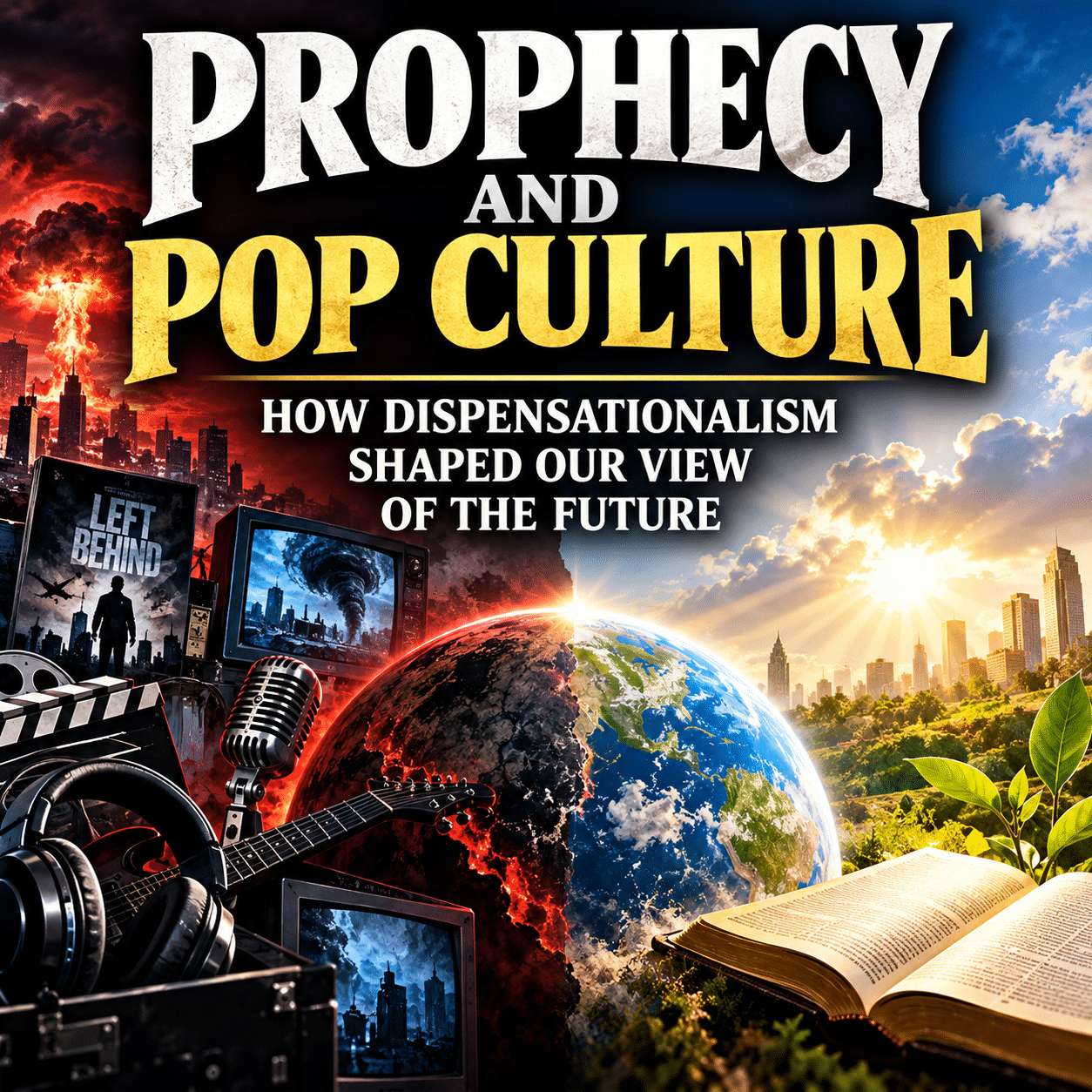
HOW DISPENSATIONALISM SHAPED OUR VIEW OF THE FUTURE
INTRO: WHEN PROPHECY BECAME PART OF OUR CULTURE
Have you ever stopped to consider how much our understanding of biblical prophecy influences the way we see the world?
Not long ago, I wrote about the old church hymns many of us grew up singing. I was raised in church, and those hymns were an important part of my childhood. Over the years, however, as my understanding of biblical prophecy changed, I began noticing something I had never seriously considered before.
Many of those songs reflected a particular interpretation of the future. They spoke of an approaching rapture, a world growing increasingly evil, a coming tribulation, and Christians waiting to escape before everything fell apart.
That interpretation is commonly associated with dispensationalism.
But the more I thought about it, the more I realized something else.
Those expectations were not confined to church buildings.
They became part of our literature, television programs, popular music, and eventually Hollywood productions. Generations grew up hearing that humanity was approaching some terrible final catastrophe.
The secular world had its nuclear wars, earthquakes, asteroids, alien invasions, and global disasters.
The religious world had its Antichrist, Great Tribulation, Armageddon, and end-of-the-world predictions.
Although these ideas came from different sources, they often created remarkably similar expectations about the future.
And I believe dispensationalism played an important role in shaping that cultural imagination.
But here is the question I want us to consider.
What if Christians have spent generations expecting the destruction of a world that Christ intended His kingdom to influence?
What if our understanding of biblical prophecy has caused us to underestimate the very kingdom Jesus came to establish?
Let’s examine how this thinking developed, how it influenced our culture, and what Scripture actually teaches about the future of Christ’s kingdom.
WHEN DISPENSATIONALISM MOVED BEYOND THE CHURCH
Dispensationalism became especially influential during the nineteenth and twentieth centuries. John Nelson Darby helped develop and popularize the system during the 1800s, and the publication of the Scofield Reference Bible in 1909 helped spread its prophetic interpretations throughout American Christianity.
Through Bible conferences, churches, seminaries, radio broadcasts, and Christian literature, dispensational teaching became familiar to millions.
Central to its popular prophetic outlook was the expectation of a future rapture, a period of terrible tribulation, the appearance of the Antichrist, Armageddon, and the visible return of Christ to establish His earthly kingdom.
So many Christians were taught to interpret wars, political developments, natural disasters, and international conflicts as signs that the end was approaching.
Rather than understanding the kingdom as an established reality continuing to advance throughout history, they were often taught to anticipate a world descending into unprecedented evil.
And those expectations eventually reached far beyond the pulpit.
In 1970, Hal Lindsey published The Late Great Planet Earth. The book interpreted modern world events through a dispensational prophetic framework and became one of the most influential religious books of its generation.
Readers were encouraged to examine contemporary events through the lens of biblical prophecy. Israel, Russia, international alliances, military conflicts, and political developments became pieces of an unfolding prophetic scenario.
For many people, the morning newspaper became almost as important as the Bible when attempting to understand prophecy.
But there was a serious problem with that approach.
The original audience of biblical prophecy was increasingly being overshadowed by modern events.
Prophecies addressed to people living thousands of years ago were being reassigned to generations living in the twentieth century.
And every new international crisis seemed to produce another reason to believe the end was near.
Yet Jesus and His apostles had already identified the approaching judgment within their own historical setting.
The question is not whether modern events can be frightening. Certainly they can.
The question is whether those events are the fulfillment of prophecies originally addressed to first-century audiences.
Those are two entirely different matters.
THE SOUNDTRACK OF AN APPROACHING END
I grew up listening to some of the music that came out of the late 1960s and 1970s. Later came the music of the 1980s.
Many of those songs are classics and still very familiar today.
But as I began considering how apocalyptic thinking influenced our generation, I noticed how frequently secular music reflected the expectation of impending catastrophe.
In 1965, Barry McGuire released Eve of Destruction.
The song reflected the fears of a generation living through the Vietnam War, racial unrest, political instability, and the possibility of nuclear annihilation.
The message was unmistakable. Humanity appeared to be standing on the brink of disaster.
Then in 1969, Creedence Clearwater Revival released Bad Moon Rising. I sang along with this song for years and never really knew the meaning. Until one day I noticed the lyrics.
John Fogerty described approaching trouble, earthquakes, hurricanes, and destruction. The song created an atmosphere of impending catastrophe.
Interestingly, Fogerty’s inspiration came from a film rather than a dispensational prophecy teacher. Nevertheless, the imagery reflected the same cultural fascination with approaching disaster.
In 1982, Prince released 1999.
The song emerged during a period of intense Cold War anxiety. The possibility of nuclear destruction was part of everyday conversation, and Prince incorporated that fear into a song about celebrating life in the face of an uncertain future.
Then came Purple Rain in 1984.
Prince associated the image of purple rain with an apocalyptic scene involving blood in the sky. Although the song also explored love and relationships, its imagery drew upon the language of catastrophe and the end.
In 1986, the Swedish rock band Europe released The Final Countdown. Another classic.
The song described a journey away from Earth into space. It was not a biblical prophecy song, but its dramatic atmosphere reflected the era’s fascination with humanity’s future.
Then in 1987, R.E.M. released It’s the End of the World as We Know It (And I Feel Fine).
This is only to name a few but once again, the idea of the world’s ending became part of mainstream popular music.
Now, I want to make an important distinction.
I am not suggesting that all these musicians were dispensationalists or that their songs were directly inspired by dispensational theology but the theme was already in that culture.
Many of these songs arose from political unrest, nuclear fears, science fiction, and the social conditions of their time.
However, we should recognize the broader cultural environment in which these songs became popular.
While the secular world was singing about impending destruction, much of the church was preaching about impending destruction.
The secular world feared nuclear annihilation.
The religious world anticipated Armageddon.
The secular world imagined civilization collapsing.
The religious world preached about a future Great Tribulation.
Different explanations, but often a remarkably similar expectation.
And that expectation became deeply rooted in the minds of generations.
WHEN PROPHECY BECAME A DATE ON THE CALENDAR
Perhaps one of the clearest examples of speculative prophecy teaching came in 1988.
Edgar C. Whisenant published a booklet titled 88 Reasons Why the Rapture Will Be in 1988.
Think about that title.
Not merely suggesting that Christ might return soon, but presenting eighty-eight reasons why the rapture would occur during a particular year.
Many people took those predictions seriously.
Yet 1988 came and went.
The predicted rapture did not occur.
But the failure of that prediction did not bring an end to the larger prophetic system that encouraged such speculation.
New predictions appeared. New international events were examined. New political leaders became candidates for the Antichrist.
And the expectation of an approaching worldwide catastrophe continued.
Now compare that approach with what Jesus actually told His disciples.
Verily I say unto you, This generation shall not pass, till all these things be fulfilled.
Matthew 24:34
Jesus identified the generation that would witness the fulfillment of the events He had described.
The disciples were not being instructed to search the newspapers of the twentieth or twenty-first century.
They were being warned about events approaching within their own historical generation.
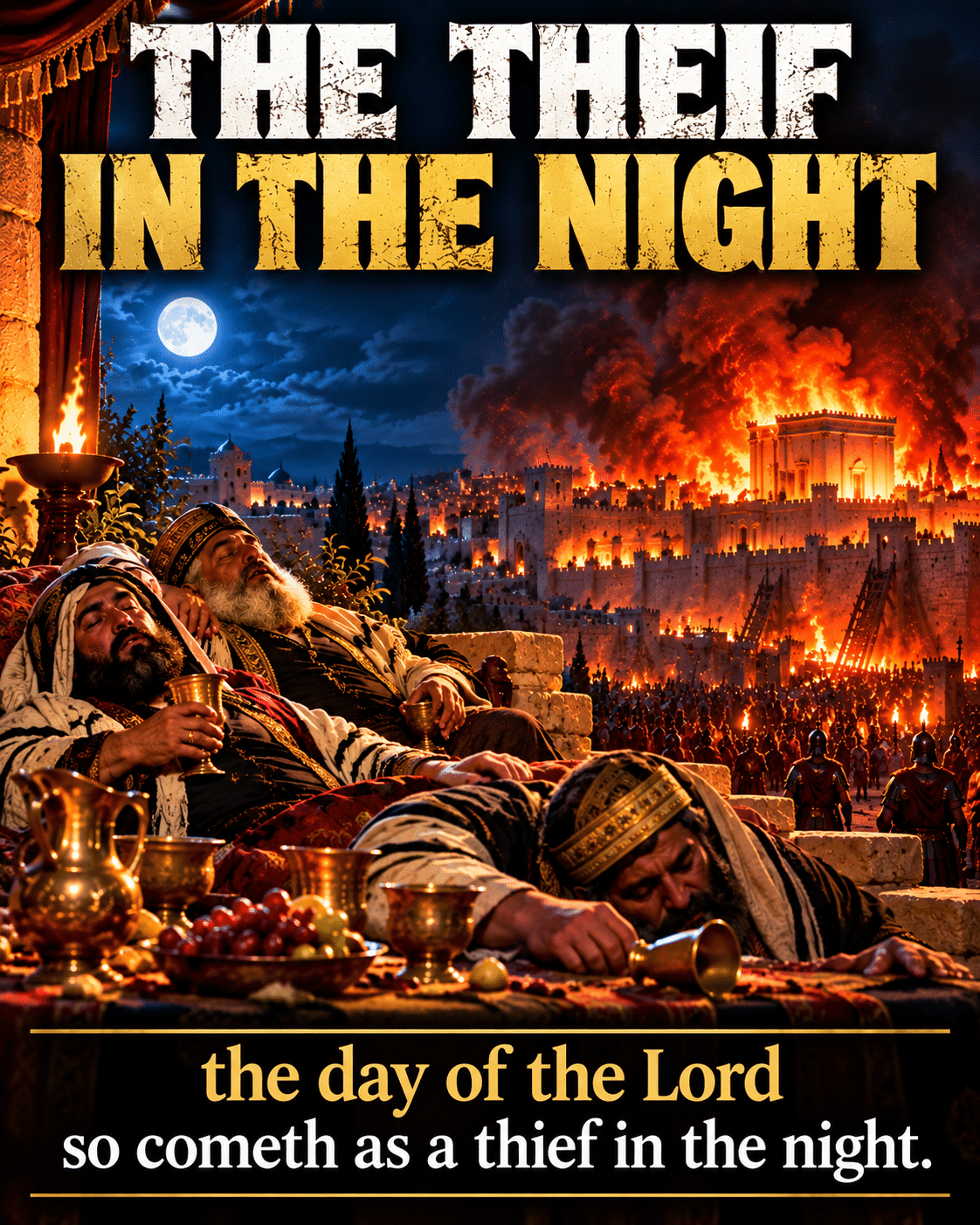
The destruction of Jerusalem in AD 70 brought the Old Covenant age to its judicial conclusion.
The problem was not that Jesus failed to return according to the predictions of modern prophecy teachers.
The problem was that those teachers had relocated first-century prophecy into their own future.
And once that happened, every new generation could imagine itself living at the very end of history.
HOLLYWOOD AND THE BUSINESS OF THE END
The influence of apocalyptic expectations did not stop with music and books.
Hollywood discovered that the possible destruction of civilization could captivate enormous audiences.
And the entertainment industry has returned to that theme repeatedly.
Consider the 1998 film Armageddon, starring Bruce Willis.
The storyline involved an enormous asteroid threatening to destroy Earth.
The film was not an interpretation of biblical prophecy. Yet its very title came from Revelation 16:16.
And he gathered them together into a place called in the Hebrew tongue Armageddon.
Revelation 16:16
A term drawn from biblical prophecy had become the title of a secular disaster movie.
That is a fascinating example of how biblical apocalyptic language entered popular culture.
Then consider the 2005 film War of the Worlds, starring Tom Cruise.
The movie portrayed civilization being devastated by an alien invasion.
Its original story came from H. G. Wells’s 1898 novel, so we cannot reasonably claim it originated with dispensationalism.
But it demonstrates how deeply the imagination of global catastrophe had become embedded in popular entertainment.
Other films, including 2012, Independence Day, Deep Impact, and The Day After Tomorrow, explored different scenarios involving civilization-threatening disasters.
Some drew upon science fiction. Others used environmental concerns, astronomical threats, or ancient predictions.
These films were not necessarily promoting dispensational theology.
But they belonged to a broader culture fascinated by the possibility that the world as we know it might suddenly come to an end.
Meanwhile, explicitly dispensational productions were bringing biblical end-times scenarios directly to audiences.
The 1972 film A Thief in the Night depicted a future rapture and the terrifying consequences for those supposedly left behind.
Later, the Left Behind novels by Tim LaHaye and Jerry B. Jenkins brought the same prophetic framework to millions of readers.
The stories eventually became films as well.
Here we can identify a direct connection between dispensational theology and popular entertainment.
What began as a particular interpretation of biblical prophecy had become the foundation for bestselling fiction and motion pictures.
And through those productions, people who might never attend a prophecy conference became familiar with the rapture, the Antichrist, the tribulation, and Armageddon.
Dispensationalism had successfully carried its prophetic expectations into popular culture.
But what about the kingdom?
Where was the cultural expectation of its continued increase?
Where was the confidence that Christ was already reigning?
Where was the message that His kingdom would continue advancing rather than retreating?
To answer those questions, we need to return to the words of Jesus and the prophets.
WHAT DID JESUS ACTUALLY SAY ABOUT HIS KINGDOM?
This is where I believe we need to reconsider the entire prophetic narrative.
For generations, Christians have been taught to expect a world that grows increasingly evil until Christ finally intervenes to rescue His people.
But when we examine the teachings of Jesus concerning His kingdom, we discover something remarkably different.
Jesus did not describe a kingdom destined for defeat.
He described a kingdom that would grow.
Another parable put he forth unto them, saying, The kingdom of heaven is like to a grain of mustard seed, which a man took, and sowed in his field:
Matthew 13:31
Which indeed is the least of all seeds: but when it is grown, it is the greatest among herbs, and becometh a tree, so that the birds of the air come and lodge in the branches thereof.
Matthew 13:32
Notice the progression.
The kingdom begins small, but it does not remain small.
It grows into something much greater than its original appearance.
Jesus was describing the nature of His kingdom, not predicting its eventual failure.
Now consider another parable.
Another parable spake he unto them; The kingdom of heaven is like unto leaven, which a woman took, and hid in three measures of meal, till the whole was leavened.
Matthew 13:33
I want us to think carefully about that statement.
The leaven was placed inside the dough, and its influence continued until the whole was leavened.
Listen to this
Jesus did not say the leaven would eventually be overwhelmed by the dough.
Now let this sink in.
He did not say the leaven would have to escape before the dough became too corrupt.
I really hope you caught the power of that.
He described a continuing process of influence and transformation.
What a remarkable contrast to the message that the world must continually deteriorate until the kingdom can finally succeed!
The kingdom does not advance by abandoning the world.
It advances through the reign of Christ and the transforming power of His truth and his glory fills the earth.
And this was not a new idea introduced by Jesus.
The prophets had already described the increasing reign of the Messiah.
OF THE INCREASE OF HIS GOVERNMENT THERE SHALL BE NO END
Consider Isaiah’s prophecy concerning the promised Messiah.
For unto us a child is born, unto us a son is given: and the government shall be upon his shoulder: and his name shall be called Wonderful, Counsellor, The mighty God, The everlasting Father, The Prince of Peace.
Isaiah 9:6
Of the increase of his government and peace there shall be no end, upon the throne of David, and upon his kingdom, to order it, and to establish it with judgment and with justice from henceforth even for ever. The zeal of the LORD of hosts will perform this.
Isaiah 9:7
Notice what Isaiah said.
Of the increase of His government and peace there shall be no end.
Not a temporary kingdom.
Not a defeated kingdom.
Not a kingdom that must retreat because evil becomes too powerful.
A kingdom whose increase has no end!
And when did this kingdom begin?
The angel Gabriel spoke to Mary concerning the birth of Jesus.
He shall be great, and shall be called the Son of the Highest: and the Lord God shall give unto him the throne of his father David:
Luke 1:32
And he shall reign over the house of Jacob for ever; and of his kingdom there shall be no end.
Luke 1:33
Gabriel was announcing the fulfillment of the promises made concerning David’s throne.
The Messiah was coming to reign.
And after His resurrection and ascension, Peter declared that Christ had been exalted to the right hand of God.
Therefore being by the right hand of God exalted, and having received of the Father the promise of the Holy Ghost, he hath shed forth this, which ye now see and hear.
Acts 2:33
Christ’s reign was not postponed for thousands of years.
He was already enthroned.
The apostles were proclaiming an established kingdom, not merely announcing that someday a kingdom might arrive.
Paul made this even clearer.
For he must reign, till he hath put all enemies under his feet.
1 Corinthians 15:25
Notice the word must.
Christ must reign.
His reign is not dependent upon whether the nations cooperate or whether evil temporarily increases.
The victory belongs to Christ.
Now compare that declaration with the expectation that history must move toward the triumph of an Antichrist before Christ’s kingdom can become victorious.
Those are profoundly different ways of understanding the future.
One places the emphasis upon the increasing power of evil.
The other places the emphasis upon the continuing reign of Christ.
And I believe our understanding of prophecy determines which expectation dominates our thinking.
DANIEL SAW A KINGDOM THAT WOULD NEVER BE DESTROYED
Long before the birth of Christ, Daniel interpreted Nebuchadnezzar’s dream concerning the succession of earthly kingdoms.
The image represented kingdoms that would rise and fall throughout history.
But Daniel also described another kingdom.
And in the days of these kings shall the God of heaven set up a kingdom, which shall never be destroyed: and the kingdom shall not be left to other people, but it shall break in pieces and consume all these kingdoms, and it shall stand for ever.
Daniel 2:44
Notice the timing.
In the days of these kings.
Daniel did not describe a kingdom that would be established only after thousands of years of waiting.
He described God’s kingdom arising within the historical succession of earthly empires.
And what would distinguish this kingdom from the others?
It would never be destroyed.
Earthly kingdoms rise and fall.
Political powers appear and disappear.
Empires conquer and eventually collapse.
But the kingdom established by God would stand forever.
Now consider how differently that sounds from the popular end-times narrative.
For generations, Christians have been encouraged to examine every political conflict as evidence that the world is approaching its final destruction.
But Daniel directed attention toward a kingdom that would outlast the political powers of the earth.
The emphasis was not upon the permanent triumph of evil.
It was upon the everlasting victory of God’s kingdom.
THE END OF THE AGE WAS NOT THE END OF THE EARTH
Here is where understanding the historical context of biblical prophecy becomes essential.
When Jesus spoke about the end of the age, He was not announcing the destruction of the physical planet.
He was speaking within the historical and covenantal world of first-century Israel.
The Mosaic covenant had governed Israel for centuries.
The temple stood at the center of its sacrificial system.
The priesthood, sacrifices, ordinances, and religious institutions were all associated with that covenantal arrangement.
But the coming of Christ brought the fulfillment of what the law and prophets had anticipated.
The writer of Hebrews explained the approaching disappearance of that former covenantal order.
In that he saith, A new covenant, he hath made the first old. Now that which decayeth and waxeth old is ready to vanish away.
Hebrews 8:13
Notice the language.
Ready to vanish away.
The writer was describing something approaching its final disappearance during his own generation.
The Old Covenant system was passing away.
And when Jerusalem and its temple were destroyed in AD 70, the judgment brought that former covenantal order to its decisive historical conclusion.
Jesus had warned His disciples about these events.
And when ye shall see Jerusalem compassed with armies, then know that the desolation thereof is nigh.
Luke 21:20
Then let them which are in Judaea flee to the mountains; and let them which are in the midst of it depart out; and let not them that are in the countries enter thereinto.
Luke 21:21
For these be the days of vengeance, that all things which are written may be fulfilled.
Luke 21:22
Notice the geographical setting.
Jerusalem.
Judaea.
The surrounding armies.
The instruction to flee.
These were not descriptions of a global nuclear catastrophe thousands of years in the future.
They were warnings concerning an approaching judgment upon Jerusalem.
And Jesus identified those events as the days of vengeance in which the prophetic writings would reach their fulfillment.
The end being described was covenantal, not planetary.
Yet dispensational interpretations have repeatedly transferred these warnings into the modern world, causing generations to anticipate events that belonged to the closing period of the Old Covenant age.
This is why audience relevance matters.
We cannot understand biblical prophecy correctly if we remove its original audience, historical circumstances, and covenantal setting.
THE KNOWLEDGE OF THE LORD SHALL COVER THE EARTH
Now let’s return to the future of the kingdom.
What did the prophets anticipate concerning the influence of God’s truth?
For the earth shall be filled with the knowledge of the glory of the LORD, as the waters cover the sea.
Habakkuk 2:14
Think about that picture.
The knowledge of the glory of the Lord filling the earth.
Not merely surviving in a small corner of the world.
Not permanently retreating before the power of evil.
But filling the earth as the waters cover the sea.
Isaiah described a similar expectation.
They shall not hurt nor destroy in all my holy mountain: for the earth shall be full of the knowledge of the LORD, as the waters cover the sea.
Isaiah 11:9
This prophetic imagery speaks of the transforming influence of God’s reign.
And it agrees beautifully with the kingdom parables of Jesus.
The mustard seed grows.
The leaven spreads.
The knowledge of the Lord fills the earth.
The government and peace of the Messiah continue to increase.
These passages present a vision of victory, growth, and expanding influence.
Now I am not suggesting that evil has disappeared from the world or that every individual will automatically embrace righteousness.
The presence of evil does not mean the kingdom has failed.
Jesus taught that the kingdom would advance in the midst of opposition.
But opposition is not the same as defeat.
And temporary resistance does not cancel the promise of continuing increase.
The kingdom belongs to Christ, and His reign is everlasting.
IF DISPENSATIONALISM INFLUENCED CULTURE, WHY CAN’T THE KINGDOM?
This brings us back to the subject of popular culture.
Think about what has happened over the past century.
Dispensational teaching spread through churches, Bible colleges, prophecy conferences, radio, television, and Christian publishing.
Its expectations became familiar through bestselling books and movies.
Meanwhile, secular entertainment continued exploring the destruction of civilization through wars, natural disasters, asteroids, alien invasions, and other catastrophic scenarios.
The two movements were not identical, nor did every secular disaster story originate with dispensational theology.
But the larger cultural result is unmistakable.
Generations became accustomed to imagining the future in terms of approaching catastrophe.
And Christians were often among those most convinced that the world was destined to become progressively worse.
Now I want to turn that entire expectation around.
If a theological interpretation centered upon impending destruction could influence so many areas of culture, what could happen if Christians began embracing the biblical expectation of Christ’s increasing kingdom?
What if we began producing music that celebrated the reign of Christ rather than continually anticipating the world’s collapse?
What if our literature emphasized the power of truth, righteousness, reconciliation, and redemption?
We already see Christian filmmakers already telling stories that reflected the transforming influence of the kingdom.
What if we approached education, business, community leadership, family life, and the arts with the expectation that kingdom principles could make a lasting difference?
I am not talking about forcing Christianity upon society through political power.
I am talking about the influence Jesus described when He compared His kingdom to leaven.
Leaven works from within.
Its influence spreads.
And over time, the entire lump is affected.
The kingdom of God was never intended to be a message of hopelessness.
It is a message of victory through Jesus Christ.
WE NEED TO CHANGE THE WAY WE THINK ABOUT THE FUTURE
The way we see our future will affect and influence the way we see our present.
I believe one of the greatest consequences of futurist prophecy teaching has been the way it conditioned generations of Christians to expect defeat.
When every war becomes a possible sign of Armageddon, every international crisis becomes a prophetic countdown, and every cultural problem becomes evidence that the world is nearing its end, people begin to interpret history through the expectation of disaster.
But what happens when we begin interpreting history through the established reign of Christ?
We stop looking for reasons to abandon the world and begin looking for opportunities to influence it.
We stop treating every crisis as evidence that the kingdom is losing.
We begin recognizing that Christ’s reign continues regardless of the temporary conditions of earthly nations.
We understand that kingdoms rise and fall, but His kingdom remains.
And we begin thinking beyond our own generation.
Consider what that means.
If the kingdom continues increasing, then our children and grandchildren are not necessarily inheriting a world destined for immediate destruction.
They are inheriting opportunities to participate in the continuing influence of Christ’s kingdom.
That changes how we teach.
It changes how we build.
It changes how we approach our communities.
It changes the kind of music, literature, and entertainment we might produce.
And perhaps most importantly, it changes the message of hope we communicate to the world.
Paul declared:
For the kingdom of God is not meat and drink; but righteousness, and peace, and joy in the Holy Ghost.
Romans 14:17
Righteousness.
Peace.
Joy.
Those are kingdom realities.
And those are the things Christians should be demonstrating to the world.
Not merely announcing that everything is about to collapse.
But showing what life under the reign of Christ looks like.
CONCLUSION: IT’S TIME FOR THE KINGDOM TO INFLUENCE CULTURE
When I think back over the music of my childhood, the old church hymns, the prophecy books, and the movies that captivated our generation, I recognize how deeply the expectation of an approaching end became part of our culture.
The secular world feared nuclear destruction.
Hollywood imagined global catastrophe.
And much of Christianity preached a future tribulation, Antichrist, and Armageddon.
Different stories, but often the same expectation.
The world was supposedly headed toward disaster.
But the prophets and apostles proclaimed something far greater than a world waiting to be destroyed.
They proclaimed the everlasting kingdom of Jesus Christ.
A kingdom established by God.
A kingdom that would never be destroyed.
A kingdom whose government and peace would continue to increase.
A kingdom compared to leaven spreading throughout the whole lump.
And a kingdom whose King must reign until all enemies are placed beneath His feet.
I believe it is time for Christians to recover that expectation.
We have spent generations hearing about the increase of evil.
Perhaps it is time we started talking more about the increase of the kingdom.
We have heard enough speculation about the next Antichrist.
Perhaps it is time we focused more attention upon the Christ who is already reigning.
We have watched countless movies about the destruction of civilization.
Perhaps it is time we began telling more stories about the transforming power of righteousness, truth, and peace.
And instead of raising another generation expecting the world to collapse at any moment, perhaps we should raise a generation that understands the kingdom of God is established, victorious, and continuing to advance.
Because Jesus did not compare His kingdom to something that would eventually disappear.
He compared it to leaven that would continue working until the whole was leavened.
Dispensationalism helped teach generations to expect the destruction of the world.
Fulfilled theology reminds us that Christ has established a kingdom whose increase shall have no end.
And if the expectation of destruction could influence our music, literature, television, and movies, imagine what the message of Christ’s victorious kingdom could accomplish through those same avenues.
The kingdom is not waiting to begin.
The King is not waiting to be enthroned.
Christ reigns.
And His kingdom continues to increase.
It’s time we started thinking, teaching, creating, and living like we believe it.