Table of Contents
MOSES WAS FADING AWAY
And the light shineth in darkness; and the darkness comprehended it not.
John 1:5
When people hear the expression darkness of this world, they often immediately think about the evil taking place in our present generation. They think about corruption, violence, immorality, political unrest, and the apparent increase of wickedness throughout society. Many have been taught that the world is growing darker and that the powers of darkness are becoming stronger as humanity approaches some future catastrophic event.
Consequently, whenever they encounter the words darkness, night, or rulers of darkness in the New Testament, they automatically apply those expressions to the world in which we live today. But have we stopped to consider what these expressions meant to the people who originally heard them? What darkness were Jesus and His apostles describing? What world was passing away during their generation? Could much of this language have been describing the final years of the Old Covenant Mosaic age rather than predicting the spiritual condition of our modern world?
When John wrote that the light was shining in darkness, what darkness was he describing? Was he speaking of some mysterious kingdom of evil operating beyond the physical world? Was he describing the condition of mankind in general? Or was there a much deeper covenantal significance to his words?
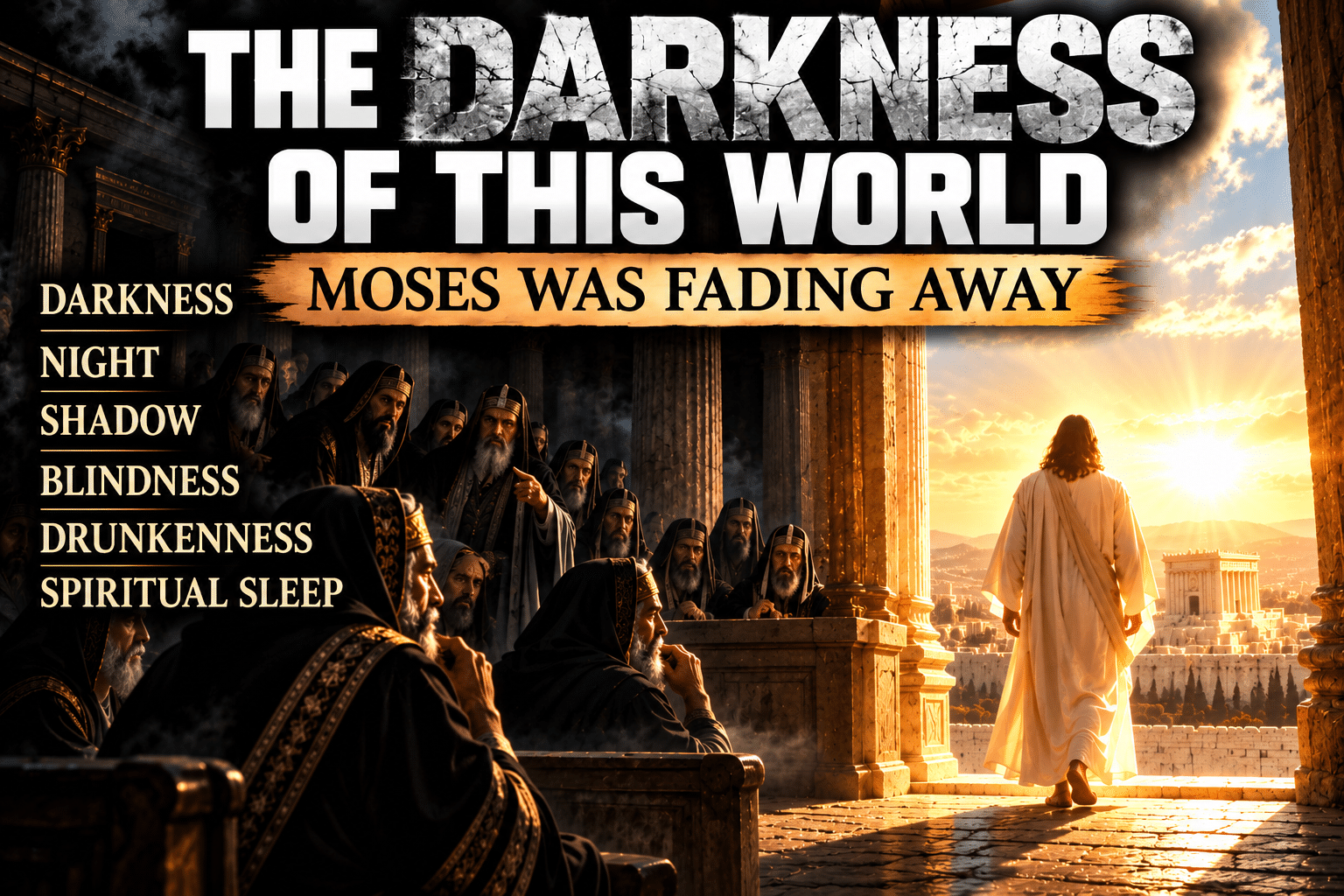
Throughout the Scriptures, darkness, blindness, night, drunkenness, and spiritual sleep are repeatedly used to describe the condition of those who could not perceive the truth of God. These expressions become especially significant when we examine the final generation of Israel living under the Mosaic covenant.
Jesus Christ had come as the promised light. The Law and the prophets had testified of Him. The sacrifices, priesthood, temple, and ordinances had pointed toward His coming. Yet when the substance arrived, many who possessed the shadow refused to recognize Him.
The religious leaders who claimed to possess the light were themselves walking in darkness. They were blind guides leading the blind, and their attachment to the fading Mosaic administration prevented them from recognizing the glory revealed in Jesus Christ.
The darkness of that covenantal world was passing away, and the true light was already shining.
THE PEOPLE WHO SAT IN DARKNESS
Long before Jesus began His earthly ministry, the prophets described Israel’s spiritual condition through the imagery of darkness and blindness.
To give light to them that sit in darkness and in the shadow of death, to guide our feet into the way of peace.
Luke 1:79
These words came from Zacharias as he prophesied concerning the coming Messiah and the redemption of God’s people.
Israel possessed the Law, the temple, the priesthood, and the promises. Yet the people still awaited the fulfillment of those promises. The Mosaic administration could reveal sin, prescribe sacrifices, and testify of the coming Redeemer, but it could not bring the perfection that would come through Christ.
The expression shadow of death takes on additional covenantal significance when compared with Paul’s description of the Mosaic administration. In 2 Corinthians 3:7, Paul identifies the covenant written and engraved in stones as the ministry of death. Hebrews 10:1 declares that the Law had a shadow of good things to come, but not the very image of those things. Israel was living under an administration that revealed sin and condemnation but could not bring the perfection and life promised through Christ.
Consider the connection. Israel was sitting in the shadow of death, the Law was a shadow of things to come, and Paul identified the Mosaic covenant as the ministry of death. The shadow was never intended to remain once the substance arrived. When Jesus Christ appeared, the promised light had entered Israel’s covenantal world. The ministry of death was giving way to the ministry of the Spirit, and the fading glory of Moses was being surpassed by the abiding glory of Christ.
For the law having a shadow of good things to come, and not the very image of the things, can never with those sacrifices which they offered year by year continually make the comers thereunto perfect.
Hebrews 10:1
The Law was a shadow pointing toward something greater. It was never intended to be the final covenantal administration.
When Christ appeared, the reality toward which the Law had pointed was standing among them.
The tragedy was that many who had spent their lives studying Moses failed to recognize the One of whom Moses had written.
THEY GROPED FOR THE WALL LIKE BLIND MEN
Isaiah provides a remarkable description of Israel’s spiritual condition.
Therefore is judgment far from us, neither doth justice overtake us: we wait for light, but behold obscurity; for brightness, but we walk in darkness.
Isaiah 59:9
We grope for the wall like the blind, and we grope as if we had no eyes: we stumble at noonday as in the night; we are in desolate places as dead men.
Isaiah 59:10
Consider the imagery Isaiah used.
They were looking for light but finding darkness. They were searching for brightness but walking in obscurity. They were groping for a wall like blind men, stumbling at noonday as though it were night.
Noonday is when the sun is shining brightly. Yet Isaiah described people who could not see even when surrounded by light.
This was not physical blindness. Isaiah was describing a spiritual condition within Israel.
Now consider what happened when Jesus appeared.
The light had come, but many within Israel continued walking as though it were night. They possessed the writings of Moses, yet they could not recognize the fulfillment of those writings standing before them.
Isaiah’s imagery becomes even more significant when we remember that Paul later drew from Isaiah 59 in Romans 11 while discussing Israel’s blindness and the coming Redeemer.
The prophets had already established the language of darkness, blindness, and stumbling as descriptions of Israel’s covenantal unfaithfulness.
THE LIGHT CAME INTO THE WORLD
In him was life; and the life was the light of men.
John 1:4
And the light shineth in darkness; and the darkness comprehended it not.
John 1:5
John introduces Jesus as the source of life and light.
But notice that the darkness did not comprehend the light.
The Greek word translated comprehended carries the sense of grasping, overcoming, or laying hold of something. John’s statement presents a powerful contrast between the light revealed in Christ and the darkness that could not overcome it.
This becomes particularly important when we follow John’s Gospel into the ministry of Jesus among His own people.
He came unto his own, and his own received him not.
John 1:11
The Messiah came to the people who possessed the covenant promises, yet many rejected Him.
The darkness was not merely a lack of religious knowledge. Israel had the Scriptures. Her leaders taught the Law. The temple stood in Jerusalem, and sacrifices continued to be offered.
Nevertheless, the promised light had arrived, and those who claimed to understand the Scriptures were often the very ones opposing Him.
NICODEMUS CAME TO JESUS BY NIGHT
There is another detail in John’s Gospel that deserves our attention. When Nicodemus, a Pharisee and ruler of the Jews, approached Jesus, John specifically tells us that he came by night.
The same came to Jesus by night, and said unto him, Rabbi, we know that thou art a teacher come from God: for no man can do these miracles that thou doest, except God be with him.
John 3:2
Why would John include the detail that Nicodemus came by night? Other than not wanting to be seen by his peers, let’s look at a covenantal allegory. Throughout his Gospel, John repeatedly contrasts light with darkness, sight with blindness, and truth with unbelief. Nicodemus was a teacher of Israel, a man educated in Moses and the Law, yet he approached the very Light of the world under the cover of night. Consider the covenantal symbolism. Here was a representative of the Mosaic religious establishment coming out of the night to speak with the One who had come to bring the light of the New Covenant. Nicodemus possessed knowledge of the former administration, yet Jesus told him that he must be born again. His position, religious education, and knowledge of Moses could not provide the life that Christ had come to reveal. The physical nighttime setting becomes a striking picture of the spiritual darkness that surrounded the religious world from which Nicodemus came. And within that same conversation, Jesus would explain why men loved darkness rather than light.
MEN LOVED DARKNESS RATHER THAN LIGHT
And this is the condemnation, that light is come into the world, and men loved darkness rather than light, because their deeds were evil.
John 3:19
This statement becomes especially revealing when we examine the setting.
Jesus had been speaking with Nicodemus, a Pharisee and ruler of the Jews.
Nicodemus represented the religious establishment of Israel. He was a teacher familiar with Moses, the Law, and the traditions of his people.
Yet Jesus told him that he needed to be born again.
Here was a man who possessed religious knowledge but still needed the life that could only come through Christ.
Jesus explained that men loved darkness rather than light because their deeds were evil.
The issue was not that God had failed to provide sufficient revelation. The light had come. The problem was that men preferred the darkness in which their deeds remained concealed.
For every one that doeth evil hateth the light, neither cometh to the light, lest his deeds should be reproved.
John 3:20
The light exposed what darkness had concealed.
This helps explain the hostility of the religious leaders toward Jesus. His ministry exposed their hypocrisy, challenged their traditions, and revealed the inadequacy of their confidence in the Mosaic administration.
They were not merely defending a religious institution. They were resisting the fulfillment of the very Scriptures they claimed to honor.
The light had arrived, but they loved the darkness.
THE BLIND WERE LEADING THE BLIND
Jesus repeatedly identified the religious leaders of Israel as blind.
Let them alone: they be blind leaders of the blind. And if the blind lead the blind, both shall fall into the ditch.
Matthew 15:14
Notice that Jesus did not merely accuse the Pharisees of personal blindness.
They were leaders of the blind.
Their influence extended to those who followed their teachings. Their failure to recognize Christ affected the people who trusted them for spiritual guidance.
In Matthew 23, Jesus repeatedly confronted the scribes and Pharisees, calling them blind guides and blind fools.
The irony becomes apparent when we compare His words with Paul’s description of Jewish confidence in the Law.
And art confident that thou thyself art a guide of the blind, a light of them which are in darkness,
Romans 2:19
Paul was addressing those who rested in the Law and boasted in their relationship with God.
They considered themselves guides to the blind and lights to those walking in darkness.
Yet Jesus exposed the blindness of the very religious establishment that claimed to possess the light.
Those who claimed to guide others could not recognize the Messiah.
Those who claimed to see were stumbling.
Those who claimed to possess the truth were resisting its fulfillment.
This is the darkness that surrounded the final generation of the Mosaic age.
MOSES WAS FADING AWAY
Paul provides one of the clearest explanations of the covenantal transition in 2 Corinthians 3.
But if the ministration of death, written and engraven in stones, was glorious, so that the children of Israel could not stedfastly behold the face of Moses for the glory of his countenance; which glory was to be done away:
2 Corinthians 3:7
Paul describes the ministry written and engraved in stones as the ministry of death.
He was referring to the Mosaic administration, represented by the commandments written on stone.
Notice that Paul acknowledged its glory.
The Old Covenant was not evil. It was established by God and served His purpose. But its glory was temporary because it pointed toward something greater.
Paul continued:
For if that which is done away was glorious, much more that which remaineth is glorious.
2 Corinthians 3:11
One administration was passing away. Another possessed an abiding glory.
This is essential to understanding the darkness of that covenantal world.
Moses represented an administration whose glory was fading. Christ had established the New Covenant, bringing the righteousness, life, and glory toward which the former covenant had pointed.
Yet many continued clinging to Moses while rejecting Christ.
Paul then identifies the blindness associated with this condition.
But their minds were blinded: for until this day remaineth the same vail untaken away in the reading of the old testament; which vail is done away in Christ.
2 Corinthians 3:14
But even unto this day, when Moses is read, the vail is upon their heart.
2 Corinthians 3:15
There is our connection.
The veil remained when Moses was read.
Their blindness was associated with their inability to recognize Christ as the fulfillment of the Old Covenant.
The veil was removed in Christ, not through a greater commitment to the fading administration.
This is why the contrast between darkness and light carries such profound covenantal significance.
The former covenant had served its purpose. The promised Messiah had come. The New Covenant had been established.
Yet those who refused to turn to Christ remained veiled.
Moses was fading away, but they continued looking toward Moses rather than the One to whom Moses had pointed.
THEY WERE DRUNKEN IN THE NIGHT
Paul introduces another powerful image when describing those living in darkness.
For they that sleep sleep in the night; and they that be drunken are drunken in the night.
1 Thessalonians 5:7
We should not overlook the symbolism of drunkenness.
Throughout the prophets, drunkenness frequently describes spiritual confusion, blindness, and the inability to recognize approaching judgment.
Isaiah used this language concerning Israel.
Stay yourselves, and wonder; cry ye out, and cry: they are drunken, but not with wine; they stagger, but not with strong drink.
Isaiah 29:9
For the LORD hath poured out upon you the spirit of deep sleep, and hath closed your eyes: the prophets and your rulers, the seers hath he covered.
Isaiah 29:10
Notice the connection between drunkenness, sleep, blindness, and the rulers of Israel.
Isaiah specifically said they were drunken, but not with wine.
Their intoxication was spiritual.
Now consider Paul’s words to the Thessalonians.
Those who belonged to the night were sleeping and drunken, while believers in Christ were identified as children of the light and children of the day.
Within the first-century covenantal setting, this presents a striking picture of those who remained intoxicated with the Mosaic religious system.
They were consumed with the temple, priesthood, sacrifices, traditions, and their confidence in possessing the Law.
Their attachment to the former administration had become so overwhelming that they could not recognize the fulfillment standing before them.
They were spiritually intoxicated with a covenantal system that was passing away.
They continued trusting in the temple even as Jesus had pronounced judgment upon it.
They continued boasting in Moses while rejecting the Messiah whom Moses had foretold.
They continued defending the shadows while refusing the substance.
And like drunken men stumbling through the night, they were unaware of the approaching judgment upon their covenantal world.
This was not an indictment of God’s original purpose in giving the Law. It was an indictment of those who had made the fading administration their confidence while rejecting its fulfillment in Christ.
THE NIGHT WAS FAR SPENT
Paul’s language in Romans 13 brings the covenantal imagery into even sharper focus.
The night is far spent, the day is at hand: let us therefore cast off the works of darkness, and let us put on the armour of light.
Romans 13:12
Notice the time language.
The night was far spent.
The day was at hand.
Paul was describing something approaching his original audience, not an event thousands of years removed from their lives.
Within the covenantal transition, the night represents the passing age, while the approaching day points toward the consummation of the order established through Christ.
The Mosaic age was nearing its conclusion.
The temple still stood. The priesthood continued functioning. Sacrifices were still being offered.
But the New Covenant had already been established through the death and resurrection of Jesus Christ.
For approximately forty years, the old administration continued visibly alongside the growing New Covenant community.
During that transition, the apostles repeatedly warned their contemporaries concerning the approaching judgment.
The night was nearly over.
The day was approaching.
Paul used similar imagery when writing to the Thessalonians.
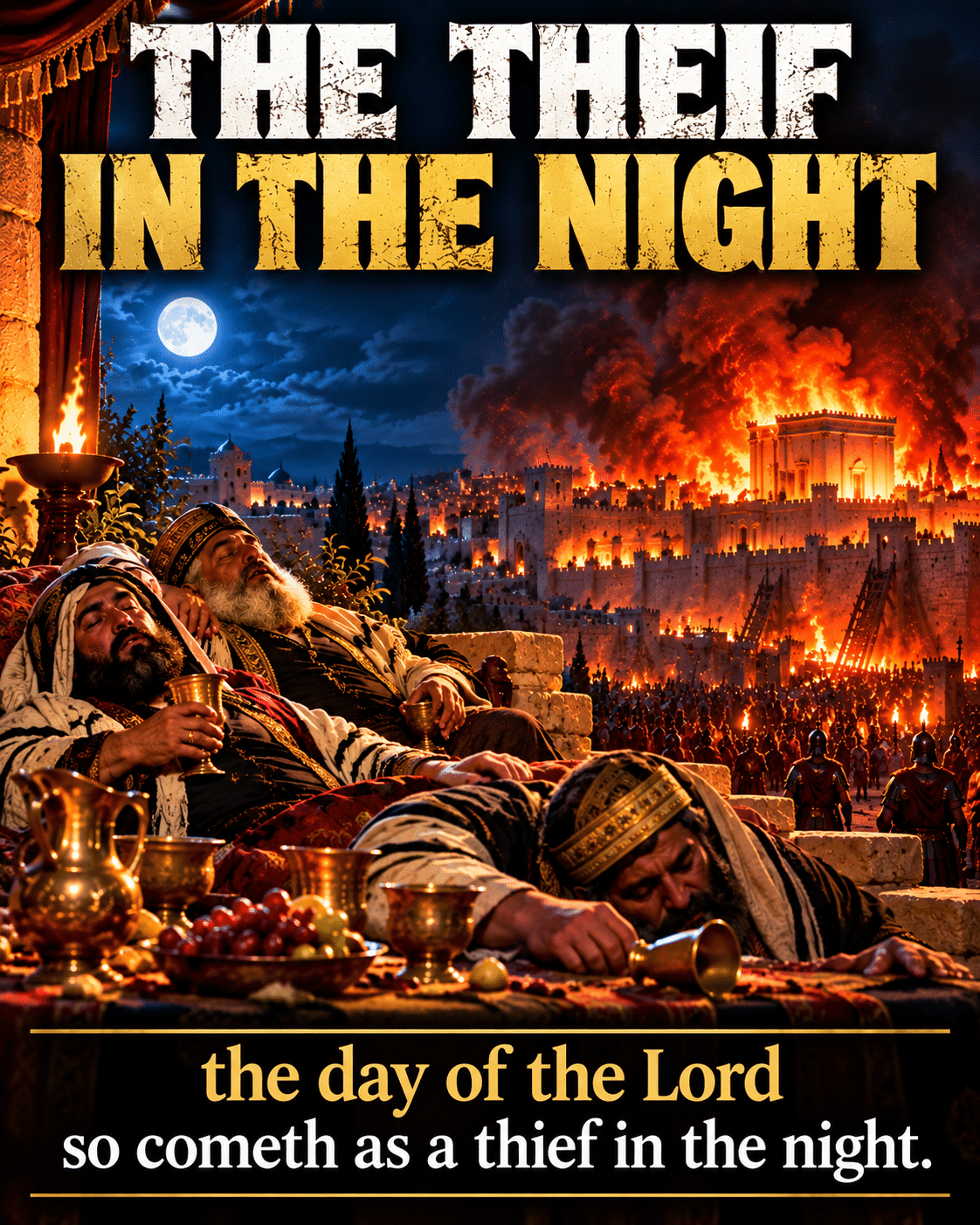
But ye, brethren, are not in darkness, that that day should overtake you as a thief.
1 Thessalonians 5:4
Ye are all the children of light, and the children of the day: we are not of the night, nor of darkness.
1 Thessalonians 5:5
The believers were not identified with the darkness of that passing age.
They belonged to Christ.
They had received the light, and they were instructed to remain watchful and sober as the day approached.
The contrast was not between two different physical worlds.
It was between those who belonged to the fading covenantal order and those who had entered the life and light of the New Covenant.
THE DARKNESS WAS PASSING AWAY
John gives us another remarkable statement.
Again, a new commandment I write unto you, which thing is true in him and in you: because the darkness is past, and the true light now shineth.
1 John 2:8
John describes the darkness as passing away while the true light was already shining.
The Greek verb translated is past carries the sense of something passing away.
This language fits the covenantal transition taking place during the apostolic generation.
The light was not waiting to appear in some distant future. Christ had already come.
The New Covenant was already established.
The former administration was growing old and approaching its final removal.
The writer of Hebrews expressed that same approaching conclusion.
In that he saith, A new covenant, he hath made the first old. Now that which decayeth and waxeth old is ready to vanish away.
Hebrews 8:13
Notice that the Old Covenant was described as ready to vanish away.
The darkness was passing.
The night was far spent.
The former covenant was ready to vanish.
These statements provide a remarkable picture of the covenantal transition unfolding in the first century.
The decisive judgment upon Jerusalem and the destruction of the temple in AD 70 brought the visible Mosaic administration to its historical conclusion.
The sacrifices ceased. The temple was destroyed. The priesthood could no longer function as it had under the Law.
What had been fading away was finally removed.
But the light of Christ remained.
THE RULERS OF THE DARKNESS OF THIS WORLD
This covenantal background also helps illuminate Paul’s words concerning the rulers of darkness.
For we wrestle not against flesh and blood, but against principalities, against powers, against the rulers of the darkness of this world, against spiritual wickedness in high places.
Ephesians 6:12
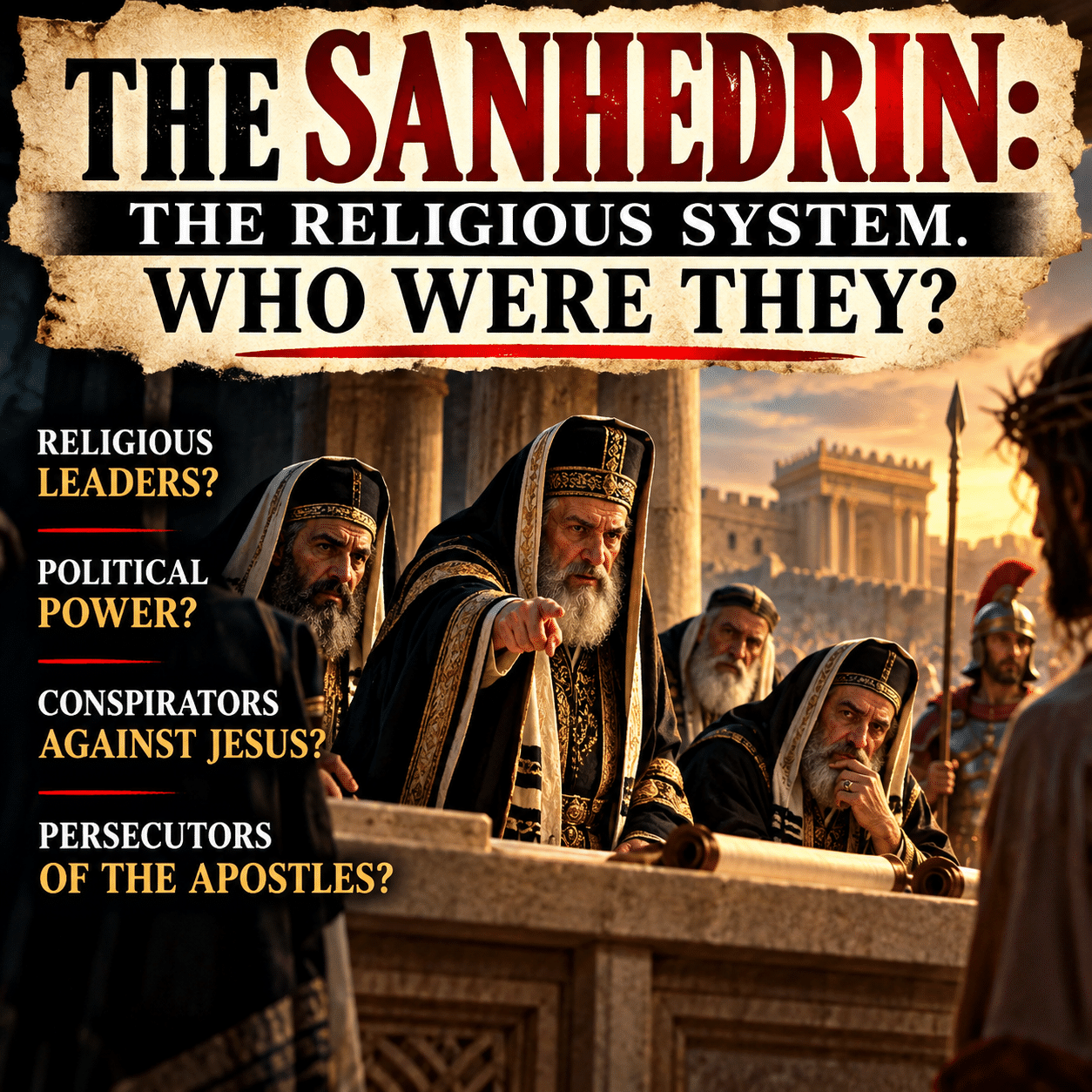
As we have examined in previous studies, Paul’s language concerning principalities, powers, and rulers must be understood within the historical circumstances confronting the early church. The religious authorities who opposed Christ and persecuted His followers exercised considerable influence within that passing covenantal world. Their spiritual blindness, resistance to the Gospel, and persecution of believers formed part of the darkness against which the early Christians struggled. The apostles were not confronting an imaginary enemy. They were living through the final years of a religious administration whose leaders frequently opposed the revelation of Christ.
DARKNESS DOES NOT ALWAYS MEAN THE OLD COVENANT
Before concluding, an important distinction should be made.
Not every reference to darkness, night, blindness, or drunkenness in Scripture identifies the Old Covenant age. These expressions can also describe sin, ignorance, unbelief, moral corruption, and divine judgment.
The meaning must be determined by the audience, historical circumstances, and surrounding context.
However, when these expressions appear within passages addressing Israel’s blindness, the rejection of Christ, the fading Mosaic administration, and the approaching judgment upon that generation, their covenantal significance becomes difficult to overlook.
The Scriptures repeatedly connect Israel’s spiritual blindness with the failure to recognize the fulfillment of the Law and the prophets in Jesus Christ.
That is the darkness we have been examining.
THE LIGHT REMAINS
Jesus declared:
I am come a light into the world, that whosoever believeth on me should not abide in darkness.
John 12:46
Christ did not come merely to improve the Mosaic administration.
He came to fulfill what the Law and the prophets had promised.
He brought the reality toward which the shadows had pointed.
He removed the veil.
He revealed the Father.
He established the New Covenant.
And He delivered His people from the condemnation and blindness associated with the former administration.
The religious leaders who rejected Him continued clinging to Moses, the temple, and the sacrifices. They were attempting to preserve an administration whose appointed purpose had been fulfilled.
But the glory of Moses was fading away.
The night was far spent.
The darkness was passing away.
And the true light was already shining.
The destruction of Jerusalem in AD 70 marked the historical conclusion of the Mosaic covenantal order, but it did not extinguish the light that had come into the world.
The New Covenant was not another temporary shadow awaiting replacement.
It was the abiding reality established through Jesus Christ.
This then is the message which we have heard of him, and declare unto you, that God is light, and in him is no darkness at all.
1 John 1:5
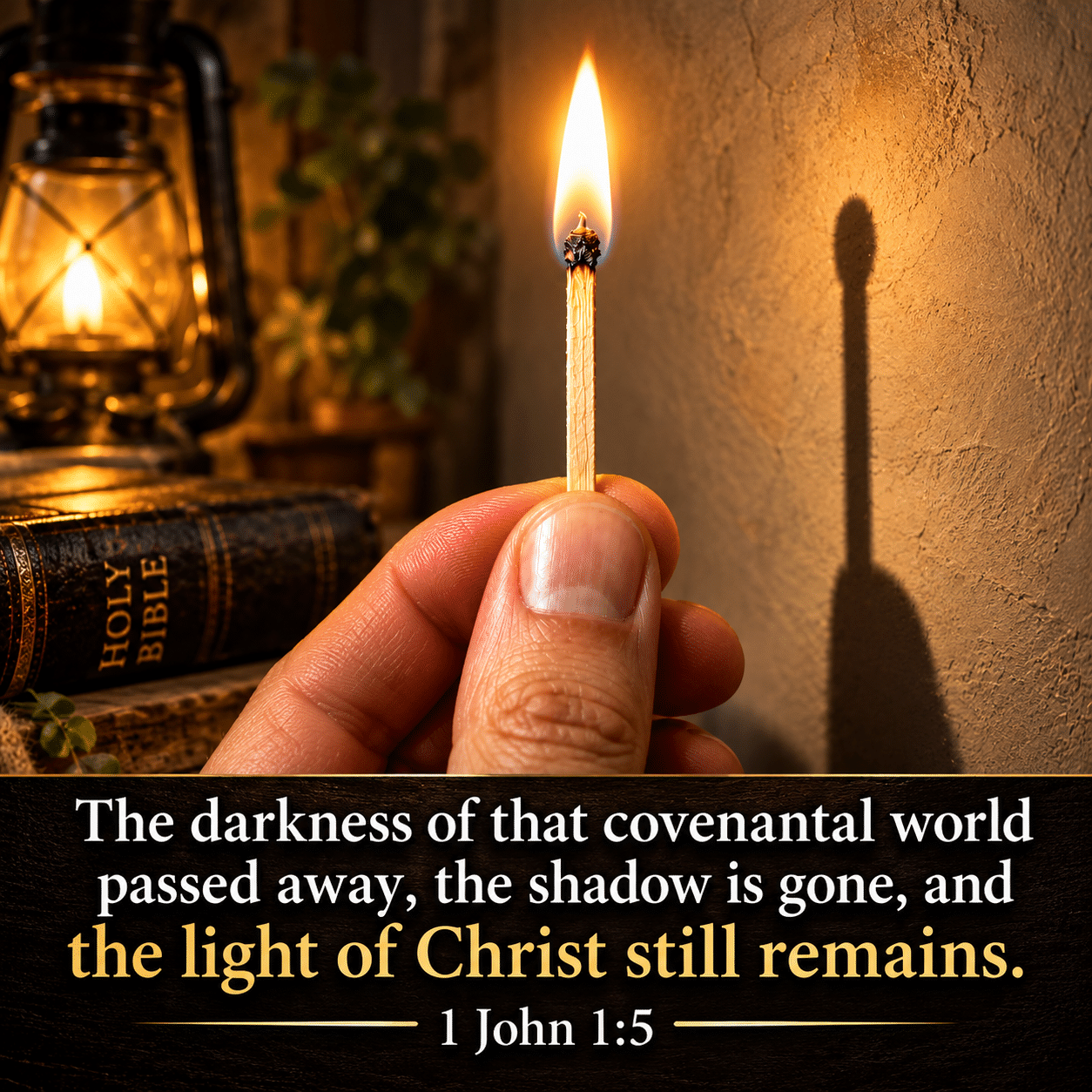
The darkness of that covenantal world passed away, the shadow is gone, and the light of Christ still remains.