Table of Contents
INTRODUCTION: WHEN RELIGIOUS AUTHORITY BECAME AN ENEMY OF CHRIST
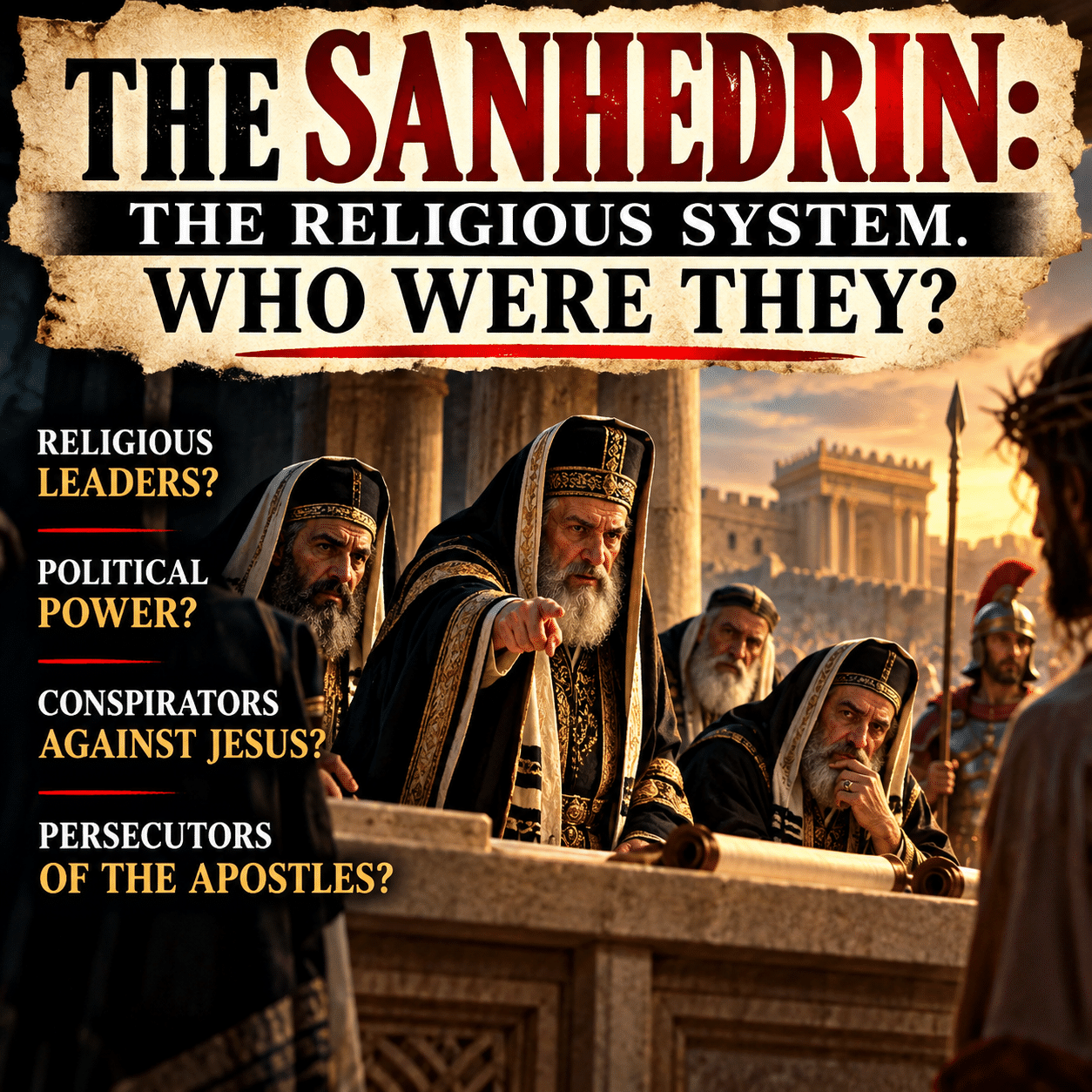
One of the most revealing aspects of first-century biblical history is the opposition Jesus Christ and His apostles encountered from the religious establishment in Jerusalem. This opposition did not come merely from ordinary individuals who disagreed with His teachings. Much of it came from an organized religious and political institution that exercised considerable authority over the Jewish nation.
That institution was the Sanhedrin.
The Sanhedrin was the highest Jewish governing council in Jerusalem, functioning as a religious court, judicial authority, and influential political body. Its members included chief priests, elders, and scribes. Among them were influential Sadducees and Pharisees, men entrusted with preserving the Law of Moses and administering justice.
Yet the New Testament records that influential members of this very establishment conspired against Jesus, participated in His condemnation, threatened His apostles, imprisoned believers, and sought to suppress the proclamation of the gospel.
The remarkable irony is that those who claimed to defend God’s covenant were among the leading opponents of the Messiah who came to fulfill its promises.
To understand the persecution of the early church, we must examine who these leaders were, how their authority operated, how they were connected to Rome, and why they considered Jesus and His followers such a serious threat.
We must also understand the historical setting. These events occurred during the final generation leading to the destruction of Jerusalem and its temple in AD 70, an event central to understanding the consummation of the Old Covenant age.
WHAT WAS THE SANHEDRIN?
The word Sanhedrin comes from a Greek term referring to a council or assembly.
The Great Sanhedrin in Jerusalem functioned as the highest Jewish council during the period of Roman rule. It dealt with religious controversies, questions concerning the Mosaic Law, judicial proceedings, and matters affecting the Jewish community.
According to later Jewish tradition, the Great Sanhedrin consisted of seventy-one members. This number was associated with Moses and the seventy elders appointed to assist him in governing Israel.
And the LORD said unto Moses, Gather unto me seventy men of the elders of Israel, whom thou knowest to be the elders of the people, and officers over them; and bring them unto the tabernacle of the congregation, that they may stand there with thee.
Numbers 11:16
Although Jewish tradition connected the Sanhedrin with this ancient council, the first-century Sanhedrin developed within a much later political and historical setting. We should not assume that its precise institutional structure existed unchanged from the days of Moses.
The New Testament identifies three principal categories of leaders associated with the council.
And as soon as it was day, the elders of the people and the chief priests and the scribes came together, and led him into their council, saying,
Luke 22:66
These three groups are important because they reveal how the Sanhedrin brought together religious interpretation, priestly authority, and political influence.
THE CHIEF PRIESTS
The chief priests included the reigning high priest, former high priests, and influential members of the priestly families.
Under the Mosaic Covenant, the priesthood had been entrusted with administering sacrifices, maintaining the temple service, and representing the people in matters of worship.
However, by the first century, the high priesthood had also become deeply entangled with political power.
The high priest was not merely a religious figure. He was one of the most influential leaders in Jerusalem.
Many of the leading priestly families were associated with the Sadducees, who exercised considerable influence within the temple establishment.
THE ELDERS
The elders were influential members of the Jewish aristocracy and leading families.
They possessed social standing, wealth, and political influence.
Their participation gave the Sanhedrin authority extending beyond strictly religious questions. The council was concerned with maintaining order, preserving established institutions, and managing relationships with the ruling powers.
THE SCRIBES
The scribes were specialists in the interpretation and application of the Law of Moses.
They studied, taught, and explained the Scriptures and the traditions associated with Jewish religious life.
Many scribes were associated with the Pharisees, although the two terms were not interchangeable.
Their influence came from their recognized knowledge of the Law and their authority as religious teachers.
Together, these groups formed an institution that could influence religious practice, public opinion, judicial proceedings, and political decisions.
THE PHARISEES AND SADDUCEES: DIFFERENT BELIEFS, COMMON OPPOSITION
The Pharisees and Sadducees were not identical religious movements.
The Pharisees emphasized careful observance of the Law and traditions handed down through earlier teachers. They believed in the resurrection of the dead and acknowledged the existence of angels and spirits.
The Sadducees were closely associated with the priestly aristocracy and temple leadership. They rejected certain beliefs held by the Pharisees, particularly concerning resurrection.
Luke records their differences.
For the Sadducees say that there is no resurrection, neither angel, nor spirit: but the Pharisees confess both.
Acts 23:8
For the mystery of iniquity doth already work: only he who now letteth will let, until he be taken out of the way.
2 Thessalonians 2:7
These disagreements were substantial.
Yet the New Testament shows that members of these competing religious groups could cooperate when confronting Jesus.
Then the Pharisees went out, and held a council against him, how they might destroy him.
Matthew 12:14
Religious differences did not prevent certain leaders from uniting against someone they regarded as a threat to their authority.
This reveals an important feature of the opposition Jesus encountered. It was not always driven by a single theological doctrine. Religious authority, institutional preservation, and political interests could become intertwined.
THE SANHEDRIN AND ITS CONNECTION TO ROME
To understand the Sanhedrin’s actions, we must understand the political conditions of first-century Judea.
Rome exercised imperial authority over the region.
Although Jewish religious leaders retained considerable influence over internal affairs, they did not possess unlimited political independence.
Roman governors, Herodian rulers, and influential priestly families participated in a complicated system of government.
The high priesthood itself was subject to political interference.
The Jewish historian Josephus records that the Roman governor Valerius Gratus removed and appointed several high priests, including the appointment of Joseph Caiaphas.
This demonstrates that the high priesthood was not functioning independently of Roman political authority.
Caiaphas served as high priest during the ministry and crucifixion of Jesus. His father-in-law, Annas, had previously held that office and continued exercising considerable influence.
The New Testament identifies both men.
And led him away to Annas first; for he was father in law to Caiaphas, which was the high priest that same year.
John 18:13
This family connection reveals how religious authority could remain concentrated among influential priestly households.
The Roman government had an interest in maintaining order in Jerusalem, especially during major Jewish festivals when large crowds gathered.
The priestly leadership likewise had an interest in preserving its position and preventing disturbances that might provoke Roman intervention.
These political considerations become especially visible in the council’s response to Jesus.
THE SANHEDRIN FEARED LOSING ITS POWER
One of the most revealing passages concerning the religious leadership appears in John 11.
After Jesus raised Lazarus, the chief priests and Pharisees gathered a council to consider what should be done about Him.
Then gathered the chief priests and the Pharisees a council, and said, What do we? for this man doeth many miracles.
John 11:47
Notice that their discussion centered upon the growing influence of Jesus.
Their concern becomes unmistakable in the next verse.
If we let him thus alone, all men will believe on him: and the Romans shall come and take away both our place and nation.
John 11:48
This statement reveals the political calculations behind their opposition.
They feared that Jesus’ growing influence might provoke a Roman response threatening their established order.
The expression concerning their place and nation indicates that they were thinking about the survival of their religious and national institutions.
Caiaphas then offered his recommendation.
Nor consider that it is expedient for us, that one man should die for the people, and that the whole nation perish not.
John 11:50
His argument was political expediency.
Rather than allowing Jesus to continue His ministry, Caiaphas presented His death as preferable to the possible loss of the nation.
John then records the council’s decision.
Then from that day forth they took counsel together for to put him to death.
John 11:53
Here we see the progression from fear to conspiracy.
The leaders were not simply debating theological differences. They had begun planning the death of Jesus.
And the historical irony is extraordinary.
They feared that allowing Jesus to continue would result in Rome taking away their place and nation.
Yet approximately forty years later, Roman armies destroyed Jerusalem and its temple.
The very institutions they were determined to preserve suffered catastrophic destruction.
THE RELIGIOUS COURT THAT CONDEMNED JESUS
The Gospel accounts reveal how the religious leadership participated in the arrest and condemnation of Christ.
Following His arrest, Jesus was brought before the high-priestly authorities.
The council sought testimony against Him.
And the chief priests and all the council sought for witness against Jesus to put him to death; and found none.
Mark 14:55
Consider the significance of this statement.
The council responsible for administering justice was seeking testimony that would justify putting Jesus to death.
The proceeding was not presented as an impartial search for truth.
The high priest eventually questioned Jesus concerning His identity.
And Jesus said, I am: and ye shall see the Son of man sitting on the right hand of power, and coming in the clouds of heaven.
Mark 14:62
Jesus’ declaration drew upon the prophetic imagery of Daniel 7, where the Son of man receives dominion and a kingdom.
The high priest responded by accusing Him of blasphemy.
And they all condemned him to be guilty of death.
Mark 14:64
The religious authorities then brought Jesus before Pontius Pilate, the Roman governor.
This demonstrates the relationship between Jewish religious authority and Roman political power.
The council sought His condemnation, but Roman authority was involved in carrying out His execution.
The chief priests even appealed to Caesar’s authority when pressuring Pilate.
But they cried out, Away with him, away with him, crucify him. Pilate saith unto them, Shall I crucify your King? The chief priests answered, We have no king but Caesar.
John 19:15
What an extraordinary declaration!
The chief priests, representing the religious establishment of Israel, appealed to Caesar while rejecting Jesus as their king.
Their willingness to invoke Roman imperial authority against Christ reveals how thoroughly religious and political interests had become entangled.
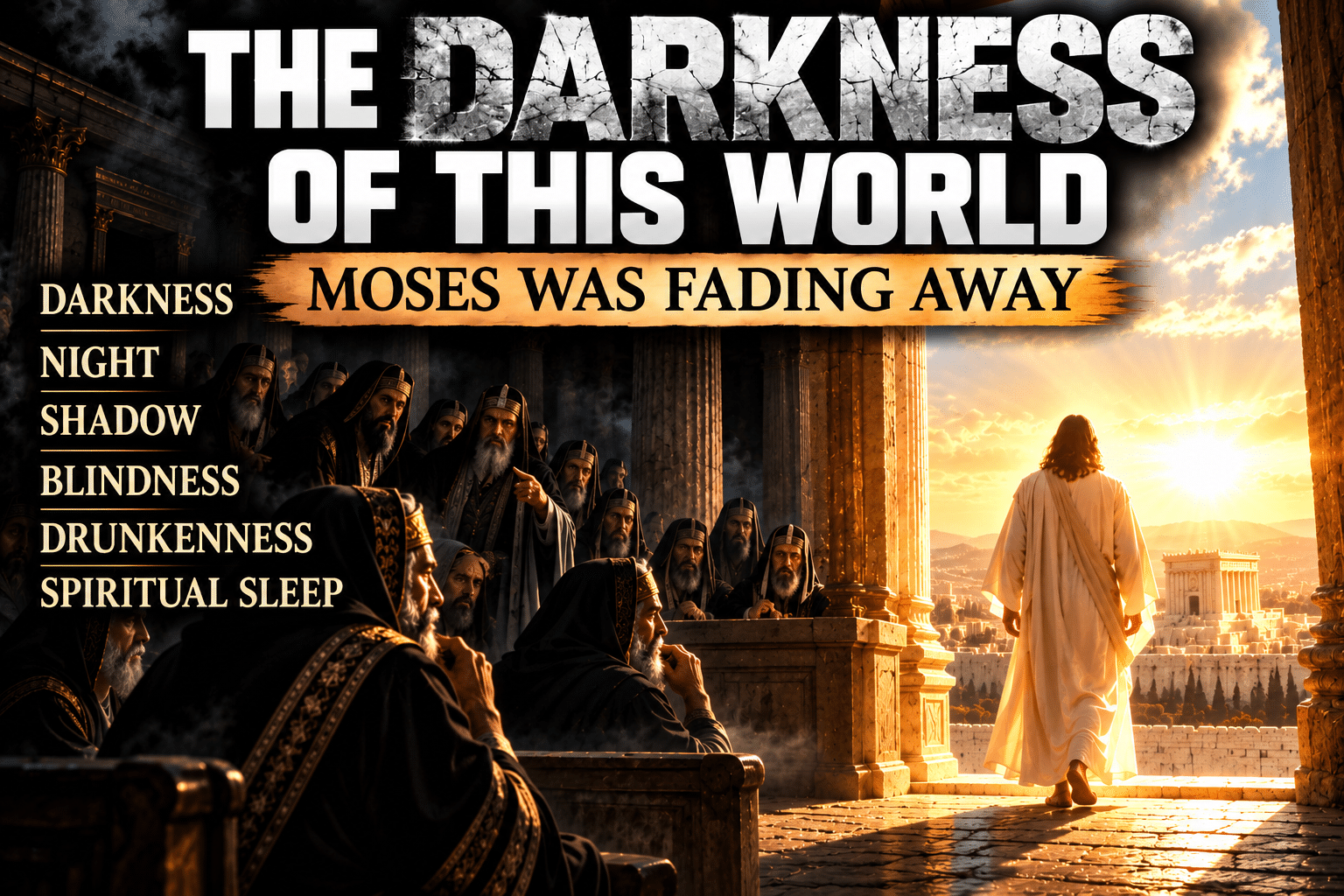
JESUS EXPOSED THE HYPOCRISY OF THE RELIGIOUS LEADERSHIP
Jesus repeatedly confronted the hypocrisy of the scribes and Pharisees.
His strongest recorded denunciations appear in Matthew 23.
But woe unto you, scribes and Pharisees, hypocrites! for ye shut up the kingdom of heaven against men: for ye neither go in yourselves, neither suffer ye them that are entering to go in.
Matthew 23:13
This accusation is especially significant.
Jesus condemned leaders who not only refused to receive the kingdom themselves but also obstructed others who were entering.
Their opposition was not confined to personal unbelief. Their influence affected the people under their religious instruction.
Jesus also exposed their concern with outward religious appearances.
Woe unto you, scribes and Pharisees, hypocrites! for ye make clean the outside of the cup and of the platter, but within they are full of extortion and excess.
Matthew 23:25
These were men who emphasized religious observance while tolerating corruption and injustice.
Jesus’ condemnation reached its climax when He connected their conduct with the historical persecution of God’s prophets.
Wherefore, behold, I send unto you prophets, and wise men, and scribes: and some of them ye shall kill and crucify; and some of them shall ye scourge in your synagogues, and persecute them from city to city:
Matthew 23:34
Notice the future language.
Jesus was announcing that His messengers would experience persecution from the very religious establishment He was confronting.
The Book of Acts records the fulfillment of that warning as the apostles and early Christians encountered arrests, threats, beatings, and executions.
Then Jesus identified the generation upon whom judgment would come.
Verily I say unto you, All these things shall come upon this generation.
Matthew 23:36
The audience and timing are unmistakably important.
Jesus was addressing first-century religious leaders and warning of judgment upon their generation.
THE SANHEDRIN CONTINUED ITS OPPOSITION AFTER THE RESURRECTION
The resurrection of Jesus did not end the opposition of the religious establishment.
After Pentecost, the apostles began publicly proclaiming that Jesus had risen from the dead and had been exalted by God.
Their preaching directly challenged the verdict reached against Jesus.
Peter and John were arrested following the healing of a lame man and their proclamation of the resurrection.
And they laid hands on them, and put them in hold unto the next day: for it was now eventide.
Acts 4:3
The following day, the apostles were brought before the religious authorities.
And Annas the high priest, and Caiaphas, and John, and Alexander, and as many as were of the kindred of the high priest, were gathered together at Jerusalem.
Acts 4:6
Notice the continued prominence of the high-priestly family.
The same religious establishment associated with Jesus’ condemnation was now confronting His apostles.
Peter boldly proclaimed the resurrection and authority of Christ.
Be it known unto you all, and to all the people of Israel, that by the name of Jesus Christ of Nazareth, whom ye crucified, whom God raised from the dead, even by him doth this man stand here before you whole.
Acts 4:10
Peter directly confronted the authorities with their responsibility in Jesus’ crucifixion.
The council responded by attempting to silence the apostles.
And they called them, and commanded them not to speak at all nor teach in the name of Jesus.
Acts 4:18
This was an attempt to suppress the gospel through institutional authority.
But Peter and John refused.
For we cannot but speak the things which we have seen and heard.
Acts 4:20
The religious court could issue commands, but it could not compel the apostles to abandon their testimony concerning Christ.
THE APOSTLES WERE IMPRISONED AND BEATEN
The persecution continued.
Acts 5 records another confrontation involving the high priest and the Sadducees.
Then the high priest rose up, and all they that were with him, (which is the sect of the Sadducees,) and were filled with indignation,
Acts 5:17
Their response was not merely disagreement.
They acted against the apostles.
And laid their hands on the apostles, and put them in the common prison.
Acts 5:18
After the apostles continued preaching, they were again brought before the council.
Peter answered with a declaration that directly challenged the council’s authority.
Then Peter and the other apostles answered and said, We ought to obey God rather than men.
Acts 5:29
This statement reveals the fundamental conflict.
The religious establishment claimed authority to prohibit the preaching of Jesus.
The apostles recognized a higher authority.
Their allegiance belonged to the risen Christ.
The council eventually had the apostles beaten and ordered them not to speak in Jesus’ name.
And to him they agreed: and when they had called the apostles, and beaten them, they commanded that they should not speak in the name of Jesus, and let them go.
Acts 5:40
Here we see religious persecution exercised through an established judicial institution.
Yet the apostles continued preaching.
The authority of the Sanhedrin could not extinguish the message of the New Covenant.
STEPHEN: THE COUNCIL CONFRONTED WITH ITS OWN HISTORY
The persecution reached another significant moment with Stephen.
Acts 6 records opposition against Stephen, followed by accusations and his appearance before the council.
Stephen delivered a remarkable historical defense in Acts 7.
He traced Israel’s history from Abraham through Moses and the prophets, demonstrating how God’s purposes had repeatedly encountered resistance.
His conclusion directly confronted the religious leaders.
Ye stiffnecked and uncircumcised in heart and ears, ye do always resist the Holy Ghost: as your fathers did, so do ye.
Acts 7:51
Stephen was not condemning the Jewish people as an ethnic group. He was confronting his accusers with the pattern of resistance he had just described.
He then accused them of betraying and murdering the Just One.
Which of the prophets have not your fathers persecuted? and they have slain them which shewed before of the coming of the Just One; of whom ye have been now the betrayers and murderers:
Acts 7:52
Stephen’s words exposed the contradiction between claiming to honor the prophets and rejecting the Messiah whom they proclaimed.
The response was violent.
Then they cried out with a loud voice, and stopped their ears, and ran upon him with one accord,
Acts 7:57
Stephen was subsequently stoned.
The narrative presents an enraged assembly carrying out the killing; it does not clearly establish that the stoning followed a legally authorized formal sentence.
Nevertheless, Stephen’s death illustrates the hostility confronting the early Christian community.
SAUL AND THE AUTHORITY TO PERSECUTE CHRISTIANS
Another revealing connection appears in the early life of Saul, who later became the apostle Paul.
Before his conversion, Saul participated in the persecution of Christians.
He sought authorization from the high priest to pursue believers beyond Jerusalem.
And desired of him letters to Damascus to the synagogues, that if he found any of this way, whether they were men or women, he might bring them bound unto Jerusalem.
Acts 9:2
This passage reveals that persecution was not confined to spontaneous acts of hostility.
Saul sought official religious authorization to arrest followers of Jesus.
Later, Paul described his former conduct.
And I persecuted this way unto the death, binding and delivering into prisons both men and women.
Acts 22:4
He then identified the authority under which he had acted.
As also the high priest doth bear me witness, and all the estate of the elders: from whom also I received letters unto the brethren, and went to Damascus, to bring them which were there bound unto Jerusalem, for to be punished.
Acts 22:5
These statements demonstrate the organized character of the persecution.
Religious authority was being used to identify, arrest, and punish followers of Christ.
But Saul’s conversion transformed a persecutor into one of the most influential proclaimers of the gospel.
His life also demonstrates that individuals associated with the religious establishment were not beyond repentance and transformation.
THE SANHEDRIN WAS NOT UNITED IN EVERY DECISION
Although the New Testament records severe persecution by influential members of the council, it would be historically inaccurate to claim that every member always agreed.
Gamaliel, a respected Pharisee and teacher of the Law, urged caution when the council considered action against the apostles.
And now I say unto you, Refrain from these men, and let them alone: for if this counsel or this work be of men, it will come to nought:
Acts 5:38
He continued:
But if it be of God, ye cannot overthrow it; lest haply ye be found even to fight against God.
Acts 5:39
His warning recognized the danger of opposing a work that might genuinely be from God.
The New Testament also identifies Joseph of Arimathaea as a council member who did not consent to the decision against Jesus.
The same had not consented to the counsel and deed of them; he was of Arimathaea, a city of the Jews: who also himself waited for the kingdom of God.
Luke 23:51
These distinctions matter.
The biblical indictment concerns the actions of particular leaders, factions, and governing bodies. It must not be turned into collective blame against the Jewish people.
Jesus, His apostles, and the earliest Christians were themselves Jewish.
The conflict was fundamentally over the identity of the Messiah, the authority of Christ, and the transition from the Mosaic Covenant to the New Covenant.
JOSEPHUS CONFIRMS THE CONTINUED PERSECUTION OF CHRIST’S FOLLOWERS
The persecution of Christians by elements of the Jerusalem religious establishment is not documented only in the New Testament.
The Jewish historian Josephus provides an important account concerning James, the brother of Jesus.
In Antiquities of the Jews, Book 20, Chapter 9, Section 1, Josephus describes events around AD 62.
Following the death of the Roman governor Festus, and before his successor Albinus arrived, the high priest Ananus II assembled a council of judges.
James, identified by Josephus as the brother of Jesus who was called Christ, was brought before the council along with others.
They were accused of violating the Law and were delivered to be stoned.
This account is particularly important because it describes persecution occurring decades after the crucifixion of Jesus.
It also reveals the continuing political relationship between the high priesthood and Roman authority.
Josephus reports that some Jewish citizens objected to the proceedings. Complaints were made to King Agrippa and the incoming Roman governor.
Ananus was subsequently removed from the high priesthood.
The historical record therefore confirms both the continuing hostility of certain priestly authorities toward followers of Jesus and the political limitations under which those authorities operated.
The Sanhedrin was powerful, but it was not sovereign over Rome.
JESUS ANNOUNCED JUDGMENT UPON JERUSALEM
The opposition of the religious establishment must be understood in connection with Jesus’ warnings concerning Jerusalem.
After denouncing the scribes and Pharisees in Matthew 23, Jesus lamented the city.
O Jerusalem, Jerusalem, thou that killest the prophets, and stonest them which are sent unto thee, how often would I have gathered thy children together, even as a hen gathereth her chickens under her wings, and ye would not!
Matthew 23:37
Jesus connected Jerusalem with a history of rejecting and persecuting God’s messengers.
He then announced:
Behold, your house is left unto you desolate.
Matthew 23:38
This declaration leads directly into Matthew 24.
Jesus departed from the temple, and His disciples called attention to its buildings.
His response was unmistakable.
And Jesus said unto them, See ye not all these things? verily I say unto you, There shall not be left here one stone upon another, that shall not be thrown down.
Matthew 24:2
The temple was the center of the sacrificial system and a powerful symbol of the religious establishment’s authority.
Yet Jesus announced its destruction.
He then described the events leading to that judgment, including deception, persecution, tribulation, and the surrounding of Jerusalem by hostile forces.
Luke’s account makes the connection especially clear.
And when ye shall see Jerusalem compassed with armies, then know that the desolation thereof is nigh.
Luke 21:20
This was not a vague prediction about some unidentified city thousands of years later.
Jesus identified Jerusalem and warned His disciples concerning its approaching desolation.
He also identified the generation in which these events would occur.
Verily I say unto you, This generation shall not pass away, till all be fulfilled.
Luke 21:32
The historical fulfillment came in AD 70, when Roman armies under Titus destroyed Jerusalem and the temple.
Within the framework of Fulfilled Theology, this destruction marked the decisive historical consummation of the Old Covenant age.
The temple-centered sacrificial system was brought to an end, while the kingdom of Christ continued.
THE MYSTERY OF INIQUITY WAS ALREADY WORKING
The organized opposition to Christ and His apostles provides important historical background for understanding Paul’s description of lawlessness in the first century.
Paul did not say the mystery of iniquity would begin operating thousands of years after his lifetime.
He said it was already working.
The New Testament documents religious deception, persecution, opposition to the gospel, and the exercise of institutional authority against Christ’s followers during that very period.
The high priesthood and Sanhedrin were among the identifiable institutions involved in that opposition.
This does not automatically establish that the Sanhedrin itself was the man of sin described in 2 Thessalonians 2. That identification requires a separate examination of Paul’s complete argument.
Nevertheless, the historical circumstances are highly relevant.
Paul’s words were addressed to actual first-century believers who were experiencing persecution and opposition.
A responsible interpretation must begin with their circumstances rather than immediately transferring the prophecy into modern political events.
The mystery of iniquity was not an abstract concept disconnected from the world in which Paul lived.
Lawlessness and opposition to Christ were already present.
THE DESTRUCTION OF THE TEMPLE AND THE END OF AN AGE
The destruction of Jerusalem in AD 70 was more than a military defeat.
It brought an end to the functioning temple sacrificial system and shattered the institutional center of the priestly establishment.
The high priesthood could no longer administer sacrifices in the temple.
The Sanhedrin, as the Jerusalem-centered governing council known during Jesus’ ministry, did not continue in the same form after the catastrophe. Later Jewish judicial and scholarly institutions developed under very different circumstances.
For Christians, the theological significance of the temple had already been transformed through the work of Jesus Christ.
The New Testament presents Christ as the fulfillment of the sacrificial system and the mediator of the New Covenant.
In that he saith, A new covenant, he hath made the first old. Now that which decayeth and waxeth old is ready to vanish away.
Hebrews 8:13
Notice the language.
The first covenant had become old, and its disappearance was approaching.
The writer was addressing believers living during the historical transition from the Mosaic Covenant order to the fully established New Covenant order.
The destruction of the temple in AD 70 visibly confirmed the passing of the old sacrificial administration.
This was not the destruction of the physical universe.
It was the judgment and removal of the Old Covenant religious order centered in Jerusalem.
The religious authorities had sought to preserve their institutional position by opposing Christ.
Yet the temple-centered system they defended came to an end, while the kingdom of Christ endured.
THE KINGDOM THEY OPPOSED COULD NOT BE OVERTHROWN
The Sanhedrin possessed religious prestige, judicial influence, political connections, and the ability to intimidate and imprison.
Yet none of these powers could prevent the gospel from spreading.
The apostles continued preaching after being threatened.
Believers continued gathering after persecution intensified.
Even Saul, once an authorized persecutor of the church, became a servant of the very Christ he had opposed.
The religious establishment could condemn Jesus, but it could not prevent His resurrection.
It could threaten His apostles, but it could not silence their testimony.
It could imprison believers, but it could not destroy the kingdom.
Jesus had already declared:
And I say also unto thee, That thou art Peter, and upon this rock I will build my church; and the gates of hell shall not prevail against it.
Matthew 16:18
The events of the first century demonstrate the truth of that declaration.
The church survived persecution, the gospel spread beyond Jerusalem, and the New Covenant community continued after the temple’s destruction.
The kingdom of Christ was not dependent upon the survival of the Sanhedrin, the priesthood, or the Mosaic sacrificial system.
Its foundation was Jesus Christ Himself.
CONCLUSION: THE COURT THAT RESISTED THE MESSIAH
The history of the Sanhedrin reveals the danger of religious authority when it becomes more concerned with preserving institutional power than recognizing the truth of God.
The council included men entrusted with understanding and administering the Law of Moses.
Yet influential members of that institution opposed the Messiah, participated in His condemnation, threatened His apostles, and persecuted His followers.
Their relationship with Roman political authority further demonstrates how religious and political interests could cooperate in opposition to Christ.
The most revealing statement may be found in John 11:48, where the leaders feared that Rome would take away their place and nation.
In seeking to preserve their authority, they opposed the One who had come to fulfill God’s covenant promises.
Yet the destruction they feared eventually came upon Jerusalem.
Jesus had warned that judgment would come upon that generation, and the events of AD 70 brought the temple-centered religious establishment to its historical end.
The central lesson is not that the Jewish people were rejected as an ethnic group, nor that every religious leader participated in the persecution. Many Jews believed in Jesus, and some priests and council members responded favorably to His message.
Rather, the lesson concerns the consequences of resisting God’s revealed purpose while claiming to defend His authority.
The Sanhedrin’s history demonstrates that religious institutions can possess impressive authority, established traditions, and political influence while still opposing the work of God.
But the kingdom of Christ does not depend upon the approval of religious councils or political rulers.
The institutions that opposed Him passed away.
The kingdom they attempted to suppress endured.
And that kingdom continues to increase, not through the authority of earthly courts, but through the reign of Jesus Christ. Forever.
HISTORICAL SOURCES
Flavius Josephus, Antiquities of the Jews, Book 18, Chapter 2 — Roman involvement in the appointment and removal of high priests.
Flavius Josephus, Antiquities of the Jews, Book 20, Chapter 9, Section 1 — Ananus II, the council proceedings against James, and the response of Roman and Herodian authorities.
Flavius Josephus, The Jewish War — The Jewish revolt, Roman siege, and destruction of Jerusalem.
Mishnah, Sanhedrin 1:6 — The traditional seventy-one-member composition of the Great Sanhedrin. This later source must be distinguished from direct first-century documentation.
The New Testament — Matthew 12, 23–24; Mark 14; Luke 21–22; John 11, 18–19; Acts 4–9, 22–23; 2 Thessalonians 2; Hebrews 8.